Finding reliable Sodium Copper Chlorophyllin Powder Manufacturers in 2026 requires more than comparing prices. A supplier’s website may look polished. The factory may still lack consistent quality controls. Buyers should examine production experience, technical documentation, testing capacity, and export reliability before making contact.
Manufacturing quality expert Dr. W. Edwards Deming said, “Quality comes not from inspection, but from the improvement of the production process.” This principle matters when evaluating chlorophyllin powder suppliers. Ask whether the manufacturer controls raw material identity, copper content, moisture, color strength, microbiological limits, and heavy metal levels during production. Request a recent certificate of analysis for each batch. Check whether an independent laboratory can verify the results.
Look closely.
Reliable suppliers should explain their specifications clearly and provide traceable batch numbers, safety data sheets, packaging details, and storage instructions. Their facilities should follow suitable quality systems, such as GMP-based procedures where applicable. Certifications must also be verified with the issuing organization. A logo alone proves little.
In 2026, buyers should compare manufacturers across several practical points: minimum order quantity, sample policy, lead time, private-label support, technical communication, and destination-market compliance. Requirements can differ between countries, so regulatory confirmation remains essential. Do not assume one certificate covers every market.
A useful supplier relationship develops through evidence, not promises. I would still keep room for doubt, because laboratory results and production performance can change over time. Regular batch testing, written specifications, and documented communication provide stronger protection than a low quotation.
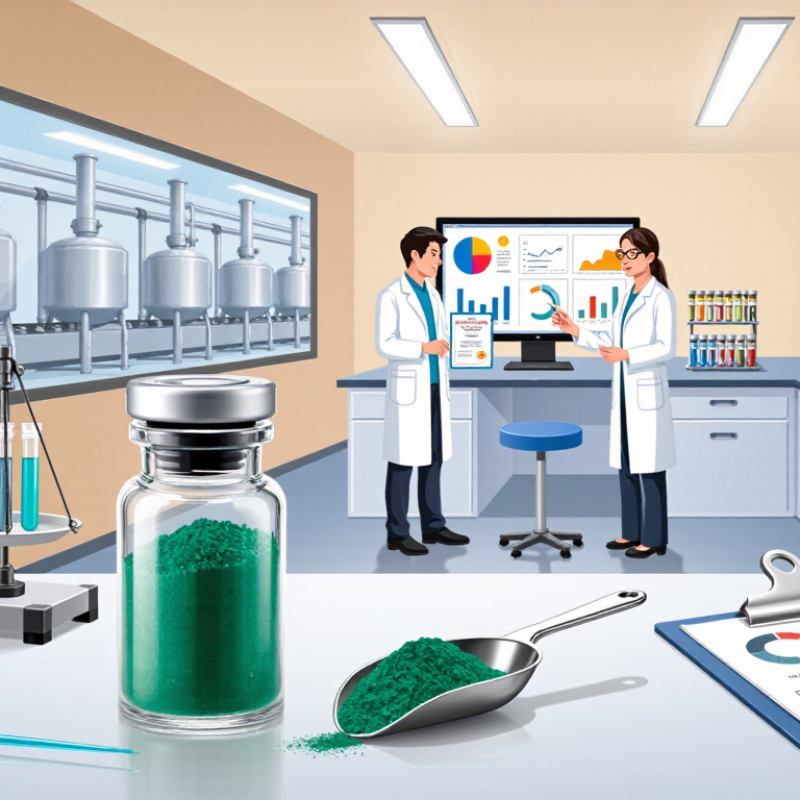
Sodium copper chlorophyllin powder is a water-soluble green pigment derived from chlorophyll. Copper is incorporated into its molecular structure, improving color stability compared with natural chlorophyll. Its shade may range from blue-green to deep green. Processing conditions matter.
This ingredient appears in food coloring, dietary supplements, oral-care products, and cosmetics, where local regulations permit. It can tint beverages, tablets, toothpaste, creams, and liquid formulations.
However, color performance changes with pH, heat, light, and other ingredients. A stable sample in water may behave differently in an acidic drink or mineral-rich cream.
When looking for suppliers in 2026, request a current certificate of analysis, specification sheet, safety data sheet, and batch traceability records. Check assay, copper content, moisture, particle size, microbial limits, heavy metals, and residual solvents. Independent laboratory testing adds confidence. Ask for a small sample before placing a large order. Small details matter.
In practical formulation reviews, powder flow and dispersibility often reveal quality differences. A supplier may provide attractive color data, yet omit stability results under real storage conditions. That deserves a closer question. Packaging should protect the powder from moisture and strong light. I would also compare three batches, not one, because consistency is easy to overestimate. Regulatory suitability must be confirmed for the target country and application.
Choosing a sodium copper chlorophyllin powder supplier starts with a precise product brief. Define the copper content, chlorophyllin assay, appearance, odor, solubility, and particle size. Set acceptable limits for heavy metals, microbiological counts, moisture, and residual solvents. A green powder is not automatically a consistent powder. Request a current certificate of analysis for every production batch. Include the testing methods, not only the final numbers.
Compliance requirements should match your intended market and application. Ask for an ingredient specification, safety data sheet, allergen statement, non-GMO statement, and manufacturing quality certificates. Confirm whether the supplier supports food, cosmetic, or other permitted applications. Documentation must be traceable to a batch number. Review production-site details and audit responses carefully. In practice, missing signatures or unclear revision dates can signal weak document control.
Supply planning needs equal attention. Confirm minimum order quantity, monthly capacity, lead time, packaging options, storage conditions, and transport protection. Ask how the powder is sealed against moisture and light. A small sample may perform well, while a later batch behaves differently. That risk deserves testing.
Tips: Prepare a scorecard before contacting suppliers. Compare quality results, compliance records, communication speed, and delivery history. Request two or three samples from different batches when possible. Keep reserve stock, but avoid excessive inventory before stability data is available. I once underestimated packaging damage during humid transit; the specification looked perfect, yet the material arrived partly caked. Some lessons are expensive.
Finding qualified sodium copper chlorophyllin powder suppliers in 2026 requires more than comparing prices. A polished website is not proof. Request a current certificate of analysis for each batch, including assay, copper content, moisture, heavy metals, microbial limits, and residual solvents. The test methods should be clearly named, not hidden behind vague terms such as “premium quality.”
Check whether the supplier can provide traceable batch numbers, production dates, shelf-life data, and storage instructions. Ask for technical and safety data sheets, allergen statements, origin information, and evidence of a controlled quality system.
Certifications may support evaluation, but they should match the intended food, cosmetic, or industrial application. A certificate alone cannot replace independent testing.
Request a small sample before signing a long-term agreement. Examine its color, odor, dispersibility, and packaging condition under realistic handling. Then compare the supplier’s results with an independent laboratory report. Differences can happen, especially with moisture-sensitive powders. That is where careful review matters. Ask how they manage complaints, rejected batches, and formula changes. Slow replies are a warning sign, though not always a failure. I would also confirm export documents and destination-market requirements with a qualified compliance professional. Supplier selection is rarely perfect; documented evidence is simply safer than confident promises.
Choosing a sodium copper chlorophyllin powder supplier requires more than comparing prices. In practice, reliable sourcing begins with verifiable credentials. Check the supplier’s legal registration, manufacturing address, quality certifications, and export experience. Request current certificates of analysis for several batches, not only one attractive sample. A polished website proves little.
Testing should match the powder’s intended use. Review identity, color strength, copper content, moisture, pH, microbial limits, and heavy metal results. Ask whether an independent laboratory performed the tests. Examine batch numbers, test dates, acceptance limits, and analyst signatures. Production records should show controlled mixing, drying, packaging, and cleaning procedures. Traceability matters when a quality issue appears months later. It is easy to overlook.
Tips: Request a small sample first. Compare it with the specification. Ask for raw-material origins and allergen statements. Confirm packaging protects the powder from light and moisture. During a factory audit, observe actual production areas, calibration labels, retained samples, and complaint records. Do not accept vague promises. I would also ask how deviations are investigated, because perfect production rarely exists.
A supplier that admits weaknesses and documents corrective actions may be more credible than one claiming zero problems. Requirements can differ by country, so review applicable food, supplement, or color-additive rules with a qualified specialist before purchase.
When comparing sodium copper chlorophyllin powder suppliers in 2026, request a line-by-line quotation. Ask for assay, mesh size, packaging, minimum order quantity, and payment terms. Confirm whether the price includes testing, export documents, insurance, and delivery to your destination. An unusually low figure may hide variable freight or weaker batch controls. Do not reward speed alone.
A representative sample should match the material supplied later. Request a recent production batch, not a hand-selected laboratory portion. Check color, odor, dispersion, moisture, assay, and microbiological results against your specification. Review the certificate of analysis and testing methods carefully. Independent testing can verify important claims. It adds cost, but one failed incoming inspection costs more. Samples can still mislead.
Discuss production lead time, monthly capacity, storage conditions, and shipping protection. Powder exposed to moisture may arrive with lumps or altered handling properties. Clarify packaging size, palletization, tracking, and procedures for damaged cartons. For recurring orders, negotiate a realistic price-adjustment formula rather than demanding an artificial fixed price. Written terms should cover batch consistency, change notifications, complaint response time, and replacement conditions. Ask how the supplier manages raw-material shortages. Keep a small qualification order before committing to annual volume. That step feels cautious. It is. Reliable supply depends on documented performance, not attractive promises.