Leave Your Message
Choosing the best Aloin Powder supplier requires more than comparing prices or reading polished websites. You need evidence. The right supplier should explain the botanical source, extraction method, purity range, and intended technical use. A low quotation may hide weak testing, unclear traceability, or inconsistent production. The real question is simple: can the supplier prove what the product contains?
Experienced sourcing begins with reliable documentation. Request a current Certificate of Analysis for each batch, not a generic template. Check aloin content, moisture, ash, microbiological results, heavy metals, and residual solvents. Ask whether an independent laboratory verified the results. Review batch numbers, production dates, packaging conditions, and storage instructions. Confirm relevant GMP or ISO systems when applicable. If the powder will enter food, cosmetic, research, or industrial processes, verify the rules for your market. Regional requirements differ. Get compliance statements in writing.
Small details matter. A transparent supplier should answer technical questions without avoiding specifics. Factory images help, but live video audits can reveal more. Samples should arrive in sealed, labeled packaging with clear documentation. No supplier is perfect. A strong review may still uncover delayed replies, incomplete records, or unclear terminology. That is not an automatic rejection, but it deserves careful follow-up. This guide will help you compare suppliers through quality evidence, regulatory awareness, communication, and practical risk control. Your final choice should feel defensible, not merely convenient.
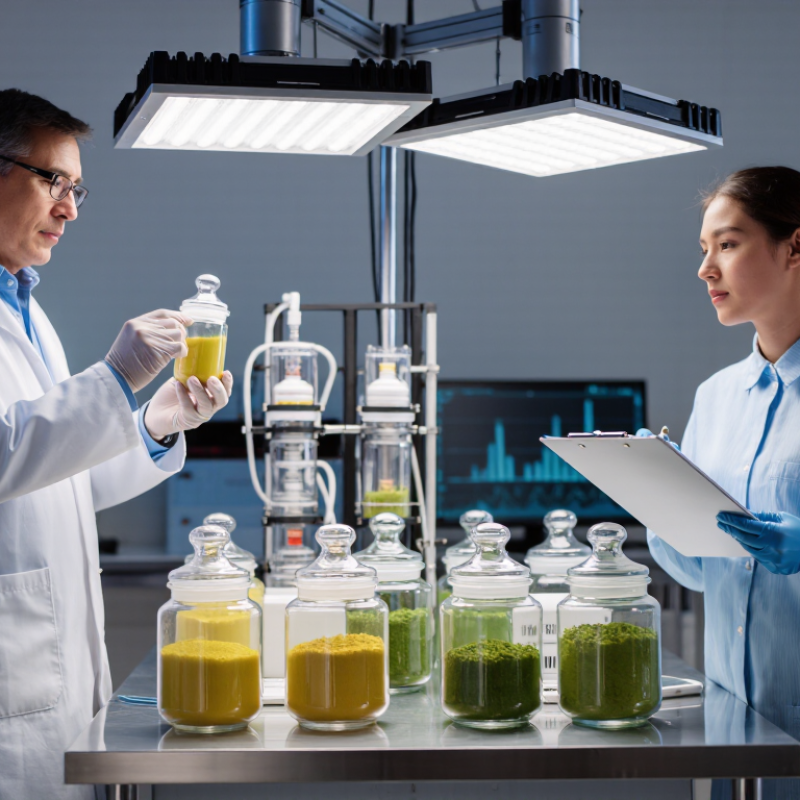
How to Choose the Best Aloin Powder Supplier?
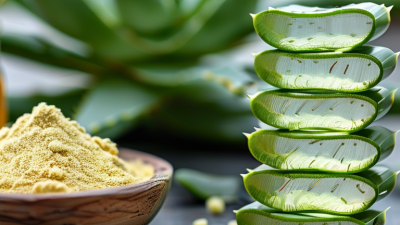
Aloin powder is not a single, uniform ingredient. Suppliers may offer aloin A, aloin B, or mixed aloe leaf extracts. Source species matter, too. Aloe barbadensis and Aloe arborescens can produce different chemical profiles. Grand View Research valued the global aloe vera market at approximately USD 915.9 million in 2022, with continued growth expected through 2030. That growth increases supplier choices, but it also increases quality risks.
Ask for a current certificate of analysis from an ISO/IEC 17025-accredited laboratory. HPLC should confirm aloin identity and concentration. The report should also show moisture, microbial limits, heavy metals, residual solvents, and batch number. A clear specification is essential. Vague wording is not enough. Check whether the powder is pure, standardized, diluted, or blended with carriers. Color alone proves little. It can change with drying conditions and plant age.
Reliable suppliers provide traceability from cultivation to packaging. Their documents should match the actual lot, not a generic sample. USP quality guidance and international botanical monographs support identity testing, contamination control, and consistent manufacturing records. Destination-market rules also differ, so compliance must be checked before purchase. A low price may look efficient. Sometimes it hides weaker testing. I would request a retained sample, review three recent batches, and compare results before committing. Even experienced buyers can overlook storage humidity, which may quietly reduce powder stability.
A practical comparison framework for evaluating aloin powder specifications, intended use, analytical testing, documentation, and supplier reliability.
| Evaluation Dimension | Product Type or Requirement | Key Characteristics | Typical Uses | Recommended Quality Checks | Supplier Evidence to Request |
|---|---|---|---|---|---|
| Aloin A Powder | Aloe-emodin-related anthraquinone glycoside | A naturally occurring aloin stereoisomer found in aloe latex. It is commonly evaluated as an analytical reference or research material rather than as a general-purpose food ingredient. | Analytical method development, reference-standard work, phytochemical research, and formulation studies where a defined aloin A profile is required. | Identity confirmation by chromatographic comparison; assay by HPLC or UPLC; evaluation of related substances, moisture, residual solvents, and microbial quality when applicable. | Certificate of analysis, chromatogram, test method, reference-standard traceability, batch number, and storage information. |
| Aloin B Powder | Aloin stereoisomer | A second naturally occurring aloin form associated with aloe latex. Its proportion may vary according to aloe source, processing conditions, and purification method. | Phytochemical research, analytical standards, botanical quality studies, and comparative testing of aloe-derived materials. | HPLC or UPLC identification and quantification; confirmation that the analytical method distinguishes aloin B from aloin A and other anthraquinone compounds. | Chromatographic profile, assay basis, impurity profile, raw-material origin, processing description, and change-control statement. |
| Total Aloin Powder | Aloin A + Aloin B | A specification expressed as combined aloin content. The reported value is meaningful only when the supplier defines the calculation method and the individual components measured. | Quality control of aloe materials, botanical research, screening of aloe extracts, and process-monitoring applications. | Request separate results for aloin A and aloin B where possible; verify the sum calculation, calibration standard, chromatographic conditions, and detection wavelength. | Full chromatogram, validated or qualified method summary, assay calculation, system-suitability results, and specification limits. |
| Aloe Latex Powder | Complex botanical material | Powder made from aloe latex or exudate and therefore contains multiple constituents. Its aloin level is usually less chemically defined than purified aloin powder. | Botanical research, raw-material comparison, process development, and laboratory investigation of aloe constituents. | Botanical identity, aloin A/B profile, moisture, ash, microbial limits, pesticides, heavy metals, and residual solvents according to the intended use. | Botanical source and plant-part statement, extraction or drying process, country of origin, contaminant testing, and batch-to-batch consistency data. |
| Purity and Assay | Quantitative specification | Purity should be defined by a measurable assay rather than by wording such as “high purity” or “premium grade.” Results should state whether they are calculated on an as-is or dry basis. | Selection of material suitable for research, analytical, technical, or regulated manufacturing applications. | HPLC or UPLC is generally preferred for separating aloin A, aloin B, and related compounds. Review calibration, reference material, repeatability, and system suitability. | Current certificate of analysis, analytical method, chromatogram, specification sheet, and representative recent batch data. |
| Identity Testing | Confirm what was supplied | Identity testing should verify the declared compound or botanical material and should not rely only on appearance or solubility. | All applications, especially purchasing of purified materials and materials used in analytical testing. | Use a suitable combination of chromatographic retention time, UV spectrum, FTIR, mass spectrometry, or other scientifically justified techniques. | Identity test result, method reference, reference spectrum or chromatogram, and sample-to-batch traceability. |
| Contaminant Control | Safety and compliance | Botanical powders may require control of microorganisms, heavy metals, pesticides, residual solvents, and foreign matter. The applicable limits depend on the destination market and intended use. | Essential for materials entering food, cosmetic, pharmaceutical, laboratory, or export supply chains. | Microbial testing may follow recognized pharmacopeial methods such as USP <61> and USP <62> where appropriate. Elemental impurities may be assessed using applicable USP or ICH-based procedures. | Recent third-party or qualified-laboratory reports, contaminant limits, method references, and documented out-of-specification procedures. |
| Physical Properties | Powder handling profile | Color, odor, particle-size distribution, bulk density, flowability, hygroscopicity, and solubility can affect processing and analytical preparation. | Capsule or blend development, laboratory weighing, extraction work, and packaging design. | Check moisture by loss-on-drying or Karl Fischer where justified; define particle size, appearance, and storage stability requirements before ordering. | Physical specification sheet, sieve or laser-diffraction data, moisture result, packaging details, and stability or retest information. |
| Manufacturing Controls | Traceable production | Consistent quality depends on controlled sourcing, documented processing, calibrated equipment, cleaning procedures, and effective batch records. | Repeated commercial purchasing and applications requiring reproducible analytical or manufacturing performance. | Review GMP or equivalent quality-system controls, supplier qualification, deviation handling, corrective actions, and change notification practices. | Manufacturing-site profile, quality certificate, audit support, batch-record summary, change-control policy, and complaint-handling procedure. |
| Packaging and Storage | Stability protection | Aloin-containing botanical powders should be protected from moisture, excessive heat, and unsuitable light exposure. The exact conditions should be supported by product data. | Storage, transport, and long-term inventory planning. | Verify container integrity, net weight, lot number, manufacturing date, retest or expiry date, recommended temperature, and humidity conditions. | Packaging specification, safety data sheet where applicable, storage statement, transport conditions, and stability or retest rationale. |
| Regulatory Fit | Intended-market review | Regulatory treatment of aloin and aloe-derived materials differs by jurisdiction, product category, concentration, and intended use. A research material is not automatically suitable for food, cosmetic, or pharmaceutical use. | Import assessment, product registration, formulation review, and market-specific compliance planning. | Check applicable national rules, restricted-use requirements, labeling obligations, and limits for aloe-derived anthraquinones before commercial use. | Regulatory statement, product classification, allergen or GMO statement where relevant, country-of-origin documents, and export documentation. |
| Supplier Selection Score | Recommended decision criteria | Choose the supplier that offers the best combination of verified identity, transparent assay, contaminant control, batch consistency, documentation, and dependable delivery—not simply the lowest price. | Prequalification, quotation comparison, pilot purchase, and long-term sourcing decisions. | Compare at least three recent batches when possible; test an incoming sample independently; assess lead time, minimum order quantity, packaging, and technical support. | Sample approval record, quality agreement, complete documentation package, service-level terms, and a clear process for handling nonconforming material. |