Choosing among Pure Beta Carotene Powder Suppliers takes more than comparing prices or examining the powder’s bright orange color. Buyers need to verify assay results, ingredient source, batch consistency, packaging, and traceability. A certificate of analysis should identify the tested lot and explain the methods used. Small details matter.
Grand View Research estimated the global carotenoids market at USD 1.84 billion in 2022 and projected continued growth through 2030. That figure covers multiple carotenoids, not beta-carotene powder alone, so it should not be mistaken for a precise measure of this product’s market. Still, it signals rising commercial interest in ingredients used for food, supplements, and other applications. For scientific context, the NIH Office of Dietary Supplements notes that beta-carotene is a provitamin A carotenoid; its effects depend on factors such as diet and individual health. Tufts researcher Elizabeth J. Johnson’s published work on carotenoids also highlights why ingredient identity and bioavailability deserve attention. Color is not proof.
This guide examines supplier documentation, manufacturing transparency, and practical quality checks. It also considers what buyers can—and cannot—conclude from a specification sheet. A low price may look attractive, but missing batch data can make comparison difficult. No supplier should be judged by marketing claims alone. Good sourcing takes evidence, and some questions may remain unanswered until a sample and records are reviewed.
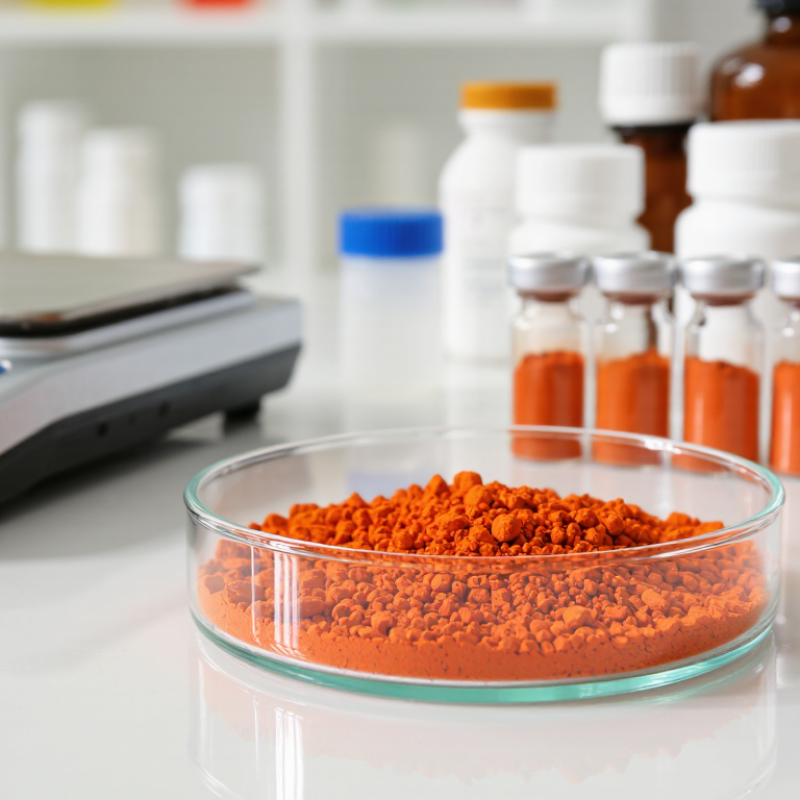
Pure beta-carotene powder is a concentrated carotenoid ingredient, not necessarily a jar of pure crystals. It may be produced by extracting pigments from plants or microalgae, fermentation, or chemical synthesis. Manufacturers then purify and crystallize the carotenoid, or disperse it into a carrier and dry it into powder. The route can affect isomer profile, color, and dispersibility. A vivid orange sample is not proof of purity.
The word “pure” needs checking. Suppliers may use it to describe the active ingredient, while the finished powder also contains carriers or antioxidants for stability. Ask for assay results, isomer profile, residual-solvent information, and a lot-specific certificate of analysis. Light, oxygen, and heat can degrade carotenoids, so packaging and storage conditions matter.
Small detail, big difference.
The NIH Office of Dietary Supplements reports that 12 micrograms of food-derived beta-carotene provides 1 microgram of retinol activity equivalents; supplemental beta-carotene uses a different conversion, 2 micrograms per 1 microgram RAE. This highlights why source and formulation should be stated clearly. A label alone cannot settle the question.
Choosing a pure beta carotene powder supplier in China starts with evidence, not polished sales claims. Request a current specification listing the active-content assay, carrier ingredients, moisture limits, and appearance. A bright orange sample may look reassuring, but color alone cannot confirm identity or potency. Details matter.
Ask for a batch-specific certificate of analysis and check whether it reports test methods and results for identity, strength, microbial limits, and heavy metals. Verify that any GMP, HACCP, or ISO certificates are current and cover the actual manufacturing site. Ask how samples are stored and protected from light, heat, and oxygen, since these conditions can affect carotenoid stability. Clarify what “pure” means: the powder may contain a carrier, even when beta carotene is its main active ingredient. I would not rely on a supplier’s summary sheet alone; it is easy to overlook a missing test or unclear unit. Request traceability records and confirm that the documents match the lot being purchased. A third-party laboratory review can help resolve gaps, though it does not replace careful document checks. Ask for proof.
A useful identity check for beta-carotene powder is its characteristic visible-light absorption pattern.
Quality note: Beta-carotene in hexane has reported absorption maxima near 425, 450, and 478 nm. These approximate reference values can support identity testing, but do not establish purity or safety on their own. When evaluating a supplier, review a batch-specific certificate of analysis, validated test methods, contaminant results, traceability, and relevant food-safety certifications.
Assessing China-based beta carotene suppliers starts with traceable evidence, not a polished brochure. Grand View Research valued the global beta-carotene market at USD 446.8 million in 2023 and forecast 4.4% annual growth through 2030. This signals commercial demand, not supplier quality. Market size is not a quality test. Request a recent certificate of analysis for the exact powder grade, with assay method, active content, moisture, and batch number. Check that the reported test method suits the product and that an independent laboratory can verify results.
Review the manufacturing site, raw-material origin, production controls, and batch traceability. Ask for current food-safety and quality certificates, then confirm their scope and validity with the issuing bodies. A useful sample should match the proposed commercial specification in color, dispersibility, and packaging. For light-sensitive beta carotene, inspect the container seal and ask how the supplier controls exposure during storage and transport. Request stability data under stated conditions, not just a general shelf-life claim. Even a neat certificate pack deserves scrutiny; documents can lag process changes. Compare several recent batches, and clarify how deviations are investigated and reported.
| Assessment Dimension | What to Check | Credible Evidence to Request | Suggested Evaluation Standard | Score (0–5) |
|---|---|---|---|---|
| Product identity | Confirm that the material is beta-carotene powder and establish whether it is synthetic or derived from a natural source. Check whether the product is a pure active ingredient or a formulated beadlet/powder containing carriers. | Product specification, ingredient declaration, manufacturing description, and batch-specific certificate of analysis (COA). | Product identity, source, and composition are clearly stated and consistent across documents and samples. | 0–5 |
| Chemical identification | Reference identifiers for beta-carotene include CAS No. 7235-40-7, molecular formula C40H56, and molecular weight approximately 536.87 g/mol. These identifiers support, but do not replace, analytical testing. | Specification and identity-test results, with the analytical method and acceptance criteria identified. | Identity is verified using a suitable, documented method rather than relying on a product name alone. | 0–5 |
| Assay and isomer profile | Check the declared beta-carotene content and whether the specification distinguishes all-trans beta-carotene from other isomers. Confirm the basis of the assay and any stated tolerance. | Recent batch COAs and method details, such as a validated HPLC procedure where appropriate. | Results are batch-specific, method-linked, and within the buyer’s agreed specification. Do not compare assay figures without checking whether they refer to active content or a formulated product. | 0–5 |
| Physical form and formulation | Assess color, particle or beadlet characteristics, dispersibility, and any carrier or antioxidant ingredients. Beta-carotene is fat-soluble and is not water-soluble; dispersible formulations should be assessed according to their intended use. | Full composition, product specification, sample, and application-specific dispersibility or performance data. | Form and composition suit the intended food, supplement, feed, or other permitted application, with all carriers disclosed. | 0–5 |
| Contaminant and microbiological controls | Review relevant heavy metals, residual solvents where applicable, microbiological criteria, and other contaminants required by the product type and destination market. | Batch COA and, where appropriate, independent laboratory reports showing test methods, units, and results. | Results meet applicable destination-market requirements and the buyer’s limits. Regulatory limits vary by jurisdiction and intended use. | 0–5 |
| Regulatory suitability | Confirm that the ingredient, source, production method, labeling, and intended use are permitted in the importing market. Food-color, food-additive, supplement, and feed rules may differ. | Regulatory statement for the specific destination and application, relevant technical documents, and supporting declarations. | Claims are specific to the destination and use; a general statement of “food grade” is not treated as proof of market authorization. | 0–5 |
| Quality-management system | Review the manufacturer’s quality system and the scope, validity, and issuing body of any claimed certification. HACCP or ISO-based certification does not by itself establish product approval or batch conformity. | Current certificates with site and scope details; audit or quality-system information where available. | Certification is valid for the relevant manufacturing site and activity, and is independently verifiable. | 0–5 |
| Stability and packaging | Beta-carotene can be sensitive to light, oxygen, and heat. Check packaging protection, storage conditions, shelf life, and whether stability data apply to the specific formulation. | Packaging specification, labeled storage conditions, shelf-life rationale, and stability data for the offered product. | Packaging and storage instructions are suitable for protecting product quality throughout transport and the stated shelf life. | 0–5 |
| Traceability and change control | Check whether the supplier can trace raw materials and finished batches and notify buyers of relevant changes to source, process, formulation, or manufacturing site. | Batch traceability example, lot coding information, recall procedure, and written change-notification policy. | Traceability is documented, and material changes are subject to a defined notification and approval process. | 0–5 |
| Sample and document consistency | Compare the evaluation sample, specification, COA, label, and quoted product. Confirm that they refer to the same grade and formulation. | Sealed sample, matching lot information, product label, specification, and COA. | Samples and documents are consistent; discrepancies are clarified before commercial approval. | 0–5 |
| Commercial and export readiness | Confirm quoted grade, order quantity, lead time, packaging, shipping terms, document availability, and export experience for the destination market. | Written quotation, proposed shipping documents, packaging details, and realistic production and shipment schedule. | Terms are complete and transparent, with no conflict between the quote, product documents, and agreed purchase specification. | 0–5 |
Scoring guide: 0 = no evidence; 1 = substantial gaps; 2 = limited evidence; 3 = acceptable with follow-up; 4 = strong evidence; 5 = complete, consistent, and independently verifiable evidence. Treat this as a supplier-screening framework, not a certification or guarantee of product compliance. Verify applicable requirements for the destination market and intended use before purchase.
Start with identity, not price. Ask each supplier for a current, lot-specific certificate of analysis (COA), with assay results, test methods, and laboratory details. For pure beta-carotene powder, check whether the stated percentage refers to beta-carotene itself or a carrier-containing preparation. Request HPLC assay data, heavy-metal and microbiological results, residual-solvent testing where relevant, and a retained sample for independent comparison. Ask for evidence. Verify that any quality certificate covers the actual manufacturing site and product scope; a logo alone proves little.
Compare offers on usable beta-carotene content, not simply price per kilogram. Include packaging, minimum order, lead time, shelf life, and storage conditions in the calculation. Light and oxygen can affect carotenoid stability, so examine the proposed container and request stability data for the stated shelf life.
The NIH Office of Dietary Supplements’ beta-carotene fact sheet reports that a trial using 20 mg daily among male smokers found increased lung-cancer risk; this is a reminder that accurate assay and clear dose-related documentation matter. It does not establish that a particular supplier’s powder is unsafe.
One limitation: supplier paperwork cannot replace independent testing of the received lot. A low quote may still be competitive, but only when the evidence, specification, and delivered active content match.
Pure beta carotene powder is used in food, beverages, dietary supplements, and some personal-care formulations. Its role depends on the grade and the intended product. It may provide color or serve as a source of provitamin A. Formulators should confirm suitability, dosage, and applicable labeling requirements before production. Small details matter.
The powder is sensitive to light, oxygen, heat, and moisture. Buyers should ask how it is protected during storage and shipping. Sealed, food-grade inner liners inside suitable drums or cartons can help limit exposure. Packaging size should match expected use; repeatedly opening a large container may affect product quality. That trade-off is easy to overlook.
For export, request a current specification sheet, certificate of analysis, safety data sheet, and clear shelf-life and storage information. Check that batch numbers match across documents and packaging. Confirm the product’s origin, declared composition, and destination-market documentation needs with the supplier and import partner. Requirements can differ by country and application, so avoid relying on generic assurances. A supplier’s response to traceability questions often says as much as its paperwork. Ask for samples when practical, then assess color, dispersibility, and performance in the actual formulation.