Choosing among the 2026 Top Pure Beta Carotene Powder Suppliers Worldwide requires more than comparing prices. This guide examines suppliers through practical, evidence-based criteria. These include beta-carotene concentration, production source, stability, testing, traceability, and application support. A reliable supplier should provide a current certificate of analysis, showing assay results, microbial limits, heavy metal testing, and residual solvent information. Independent laboratory verification adds confidence. It also helps confirm whether the powder is synthetic, fermentation-derived, or naturally extracted.
Details matter.
A consistent Pure Beta Carotene Powder should show a stable orange-red appearance and controlled dispersibility. Packaging should protect the ingredient from oxygen, light, moisture, and repeated temperature changes. Sealed inner bags, opaque containers, and clear storage instructions are useful signs. Buyers should also review minimum order quantities, lead times, sample policies, and documentation quality. These factors can affect production planning as much as the quoted price.
This overview does not treat any supplier as universally perfect. A company may offer strong laboratory data but limited customization. Another may provide excellent technical support yet require larger orders. Certifications should be checked directly, not accepted from a sales brochure alone. Regulatory expectations also differ across food, supplement, cosmetic, and feed applications. Therefore, final qualification should involve your own quality team, product specifications, and regional requirements. Supplier rankings can change as testing, capacity, and service performance change. That limitation deserves attention. The best choice is usually the supplier that consistently matches your formulation needs and provides verifiable, current evidence.
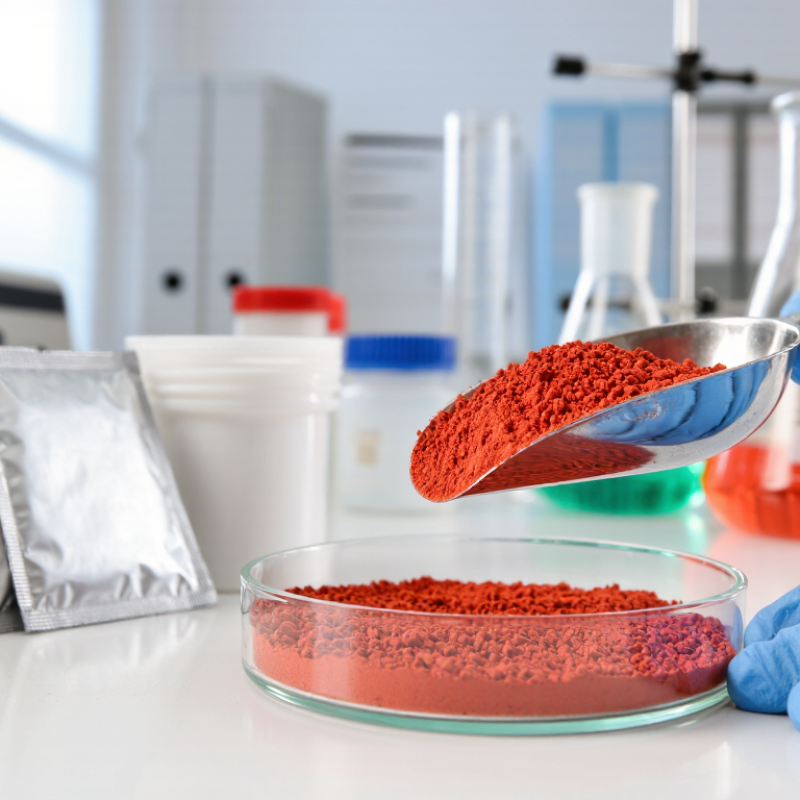
Pure beta-carotene powder begins with molecular identity, not attractive color. PubChem records beta-carotene as C40H56, with a molecular weight of 536.87 g/mol. The Joint FAO/WHO Expert Committee on Food Additives also identifies this structure in its technical specifications. These figures provide a basic checkpoint for global sourcing.
A credible powder specification should state an HPLC assay of at least 98%. This result measures beta-carotene content against a defined analytical method. It does not automatically prove low oxidation or strong stability. A 98% number alone can mislead. Buyers should request chromatograms, reference-standard details, and testing dates. HPLC conditions should follow validated laboratory practices, including system suitability and repeatability. USP General Chapter <621> offers a useful framework for chromatographic control.
Physical evidence matters too. The powder should show consistent color, controlled particle size, and protection from oxygen, heat, and light. JECFA’s specifications and EFSA’s scientific assessments support disciplined identity and safety review, but neither replaces supplier-specific batch testing. A serious supplier can provide certificates of analysis, residual-solvent data, microbiological results, and traceability records. They should also explain cis-trans isomer content, because total assay may hide an important compositional difference. In practice, documentation is often less polished than the product. That deserves scrutiny. Suppliers worldwide should be compared by verified data, not by purity claims printed on a sales sheet.

Molecular composition and purity benchmarks for evaluating pure beta-carotene powder suppliers worldwide.
Beta-carotene has the molecular formula C40H56 and a relative molecular mass of approximately 536.87 g/mol. A pure powder specification commonly uses an HPLC assay of at least 98%; the molecular formula indicates 40 carbon atoms and 56 hydrogen atoms per molecule.
In 2026, leading pure beta-carotene powder suppliers are separated by source control, not advertising language. Dunaliella salina produces a natural carotenoid mixture in saline ponds. Its beta-carotene content varies with light, salinity, harvest timing, and drying conditions. Suppliers should provide assay results, isomer profiles, residual-solvent data, and microbiological testing for every lot.
Blakeslea trispora offers fermentation-based beta-carotene with more consistent production conditions. It may suit manufacturers seeking natural-source positioning and controlled batch specifications. However, “natural” does not automatically mean stronger or safer. That assumption needs testing. The European Food Safety Authority has reviewed beta-carotene exposure from foods and supplements, while JECFA lists beta-carotene as a permitted food color additive under applicable conditions. Regulatory status still differs by market.
Synthetic beta-carotene is produced through chemical synthesis and commonly delivers high assay consistency at competitive cost. It can also provide predictable color intensity in premixes and capsules. The 2024 MarketsandMarkets carotenoids report identified food, dietary supplements, and animal nutrition as major demand sectors, reflecting wider industrial use. Grand View Research has also reported continuing growth in the global carotenoids market through the decade. These estimates are useful, but market reports often combine several carotenoids and should not be treated as pure beta-carotene data. Buyers should compare cis-trans ratios, stability after six months, carrier oils, oxidation values, and certificates from independent laboratories before ranking worldwide suppliers.
| Supply Route | Biological or Chemical Source | Typical Carotenoid Profile | Common Powder Formats | Main Commercial Strengths | Key Limitations | Best-Fit Applications | Critical Buyer Checks |
|---|---|---|---|---|---|---|---|
| Dunaliella-derived natural beta-carotene | Cultivation of halotolerant microalgae, commonly Dunaliella salina, in saline ponds or controlled systems. | A natural mixture of beta-carotene isomers, commonly including all-trans and 9-cis forms, together with variable levels of other carotenoids. | Spray-dried powders, beadlets, water-dispersible powders, and carrier-based nutritional premixes. | Natural-origin positioning, broad consumer acceptance, and suitability for clean-label or natural-product formulations where permitted. | Natural isomer ratios and assay may vary with cultivation, harvesting, extraction, and stabilization conditions; color and potency can degrade under light, oxygen, and heat. | Dietary supplements, natural food colors, functional foods, beverages, and products emphasizing algae or natural origin. | Confirm species identity, total beta-carotene assay, individual isomer profile, residual solvents, heavy metals, microbiology, oxidation markers, and natural-origin documentation. |
| Blakeslea-derived natural beta-carotene | Controlled fermentation using the filamentous fungus Blakeslea trispora. | Predominantly beta-carotene, generally with a high proportion of all-trans beta-carotene; the exact profile depends on strain and process conditions. | Oil-dispersible powders, spray-dried powders, beadlets, and dry premixes using permitted carriers or encapsulation systems. | Consistent fermentation-based production, high color intensity, and a natural-source option for markets that recognize fungal fermentation as natural. | Regulatory treatment of fermentation-derived ingredients differs by jurisdiction; process controls and documentation are essential. | Vitamin A precursor supplements, food fortification, animal nutrition, and natural-color applications. | Check fermentation organism status, allergen and GMO statements, residual processing aids, assay by HPLC, stability data, carrier composition, and destination-market approvals. |
| Synthetic beta-carotene | Chemical synthesis from petrochemical or other industrial organic intermediates, followed by purification and formulation. | Usually manufactured to provide a high proportion of all-trans beta-carotene, with controlled limits for related impurities and cis isomers. | Crystalline powder, water-dispersible beadlets, oil suspension converted to powder, and stabilized premixes. | Scalable supply, reproducible composition, strong batch-to-batch consistency, and often competitive cost for high-volume fortification. | Not generally suitable for natural-origin claims; residual solvent, impurity, and sustainability documentation may require additional review. | Mainstream vitamin supplements, food fortification, animal feed, beverages, and applications requiring consistent color or potency. | Verify synthetic-origin declaration, HPLC purity, cis-isomer limits, residual solvents, heavy metals, particle size, stability, and compliance with applicable food or supplement monographs. |
| Fermentation-based specialty supplier | Industrial microbial or fungal fermentation platform, with the exact production organism and process disclosed according to regulatory requirements. | Typically designed for a defined beta-carotene assay and controlled isomer distribution; composition is process-specific. | Encapsulated powder, water-dispersible granules, customized premix, and application-specific dry blends. | Potentially lower dependence on agricultural land, customizable formulation, and good control over particle size and dispersibility. | “Fermentation-derived” does not automatically mean “natural” in every jurisdiction; regulatory classification and labeling must be confirmed. | Premium nutrition, specialized foods, pharmaceutical-development materials, and products requiring tailored delivery characteristics. | Request a complete manufacturing description, organism and substrate information, allergen statement, traceability records, stability protocol, and regulatory status in the target market. |
| High-purity crystalline beta-carotene supplier | Purified natural or synthetic beta-carotene processed into a concentrated crystalline form; source must be confirmed for each grade. | High beta-carotene concentration with a declared all-trans content and defined impurity profile; the molecular formula is C40H56 and molecular weight is approximately 536.87 g/mol. | Fine powder, micronized powder, and stabilized crystalline material for downstream formulation. | Useful for analytical standards, pharmaceutical development, premix production, and applications requiring high active concentration. | Poor water solubility and sensitivity to oxidation can make direct incorporation difficult without emulsification, encapsulation, or antioxidant protection. | Ingredient manufacturing, laboratory reference work, high-potency supplements, and custom formulation development. | Review assay method, chromatographic purity, particle-size distribution, packaging atmosphere, antioxidant system, retest period, and certificate-of-analysis consistency. |
| Formulation and beadlet specialist | Natural or synthetic beta-carotene incorporated into carriers such as modified starch, gelatin, gum arabic, maltodextrin, or lipid systems, subject to local regulations. | The beta-carotene source and isomer profile depend on the upstream material; the finished powder includes carrier and stabilizer components. | Water-dispersible beadlets, cold-water-soluble powders, dry emulsions, and spray-dried microcapsules. | Improved dispersibility, handling, dosage uniformity, color stability, and compatibility with aqueous foods and beverages. | The nominal powder weight is not equivalent to pure beta-carotene content; carrier restrictions may affect vegan, allergen-free, halal, or kosher claims. | Powdered drinks, tablets, capsules, fortified foods, instant mixes, and animal-nutrition premixes. | Confirm active assay on an as-is basis, carrier declaration, dispersibility test, moisture, bulk density, flowability, allergen status, and accelerated-stability results. |
FCC compliance can support food-grade evaluation, where the relevant monograph applies. However, FCC status alone may not satisfy every destination market or application. Confirm the product’s legal use with a qualified regulatory professional. Heavy-metal limits must match the importing country and product category. Review lead, arsenic, cadmium, and mercury results, including units and detection limits. Ask whether testing uses ICP-MS or another validated method. Supplier audits can reveal practical issues, such as opened drums, unclear relabeling, or poor temperature control. These details are easy to overlook. I have learned that one missing document can matter more than an impressive certificate list.
Global sourcing now depends on more than assay and color. Supplier comparison should begin with the specification sheet. Confirm beta carotene concentration, carrier materials, particle size, stability data, and testing methods. A “pure” powder may still contain approved antioxidants or processing aids. That wording needs careful review.
For standard food-grade powder, typical MOQs range from 25 to 100 kilograms. Customized grades may require 200 kilograms or more. Regional manufacturers often quote 3–6 weeks for production. Imported materials may require 6–10 weeks, including documentation and freight.
Some suppliers report 2026 annual capacity between 100 and 800 metric tons. These figures are usually estimates, not guaranteed available stock.
Pricing varies sharply by concentration, source, packaging, and contract volume. Indicative 2026 quotes may range from 45 to 180 US dollars per kilogram for stabilized low-assay powder. High-assay or crystalline material can exceed that range.
Ask for a landed-cost comparison, not only an ex-works price. Small trial orders often look expensive. They can still prevent costly formulation failures.
Request recent certificates of analysis, heavy-metal results, microbiological limits, and batch traceability. Check whether the quoted lead time includes release testing. It often does not.
I would also request two retained samples from different lots. One sample can hide inconsistency. Capacity claims deserve independent confirmation, especially before a long-term purchase agreement.
Specifications change. Quotes change faster.
Pure beta-carotene powder needs more than a bright orange appearance. The key question is vitamin A equivalence. The NIH Office of Dietary Supplements states that 12 micrograms of dietary beta-carotene equals 1 microgram of retinol activity equivalents, or RAE. Supplemental beta-carotene uses a different factor: 2 micrograms equals 1 microgram RAE. This distinction can change a product’s declared vitamin A value significantly.
A supplier’s technical file should show beta-carotene content, isomer profile, residual solvents, heavy metals, microbial limits, and oxidation results. HPLC testing is especially useful for confirming potency. The National Academies’ Dietary Reference Intakes report also supports careful conversion between carotenoid intake and RAE. However, absorption varies with diet, formulation, and individual health. Numbers alone are not enough. I have seen specifications look precise while stability data remained vague.
Tips: Ask for recent batch-specific certificates of analysis. Check whether “pure” means active beta-carotene or total carotenoids. Review light and oxygen protection, because powder can lose potency during storage. Confirm the carrier material, country of manufacture, and shelf-life testing. A supplier that explains the 12:1 dietary conversion clearly usually demonstrates stronger technical control. Still, independent verification is wise before large-volume purchasing.