Why Choose a Chitosan Powder Factory for Bulk Orders?
Demand for chitosan is expanding across water treatment, agriculture, food processing, and specialized biomaterials. Grand View Research and MarketsandMarkets both forecast strong growth in the global chitosan market. Their estimates differ because market definitions and regional coverage are not identical. That detail matters. Buyers should question attractive numbers before planning production capacity.
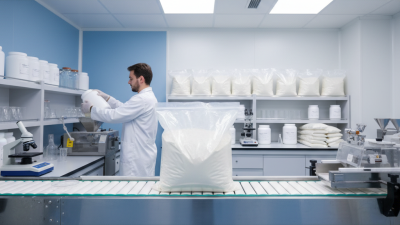
A qualified Chitosan Powder Factory offers more than large-volume pricing. It can provide controlled raw material selection, documented processing, and batch-level traceability. These controls help maintain key specifications, including degree of deacetylation, viscosity, moisture, particle size, and ash content. A reliable factory should also support certificates of analysis, stability information, and appropriate quality-system documentation. In practical terms, this means fewer surprises when powder moves from a sealed 25-kilogram bag into a pilot process or manufacturing line.
Consistency saves time.
Industry purchasing experience shows that low unit cost alone rarely defines value. Delayed shipments, variable solubility, or unclear test methods can create hidden expenses. An established factory may reduce those risks through production planning, laboratory testing, and export experience. However, no supplier is perfect. Buyers still need independent verification, representative samples, and clear acceptance criteria.
This article examines why factories can serve bulk buyers more effectively than occasional distributors. It considers quality assurance, customization, supply continuity, technical support, and total procurement cost. The goal is practical judgment, not a simple sales claim. A strong partnership begins with measurable specifications and honest communication.

Why Choose a Chitosan Powder Factory for Bulk Orders?
Chitosan powder is a biodegradable polysaccharide made from chitin. Chitin occurs naturally in shrimp, crab, and other shellfish shells. It is not usable immediately after collection. Manufacturers first clean and crush the shells. They then remove minerals and proteins through controlled chemical processing. Deacetylation converts chitin into chitosan. This step strongly affects solubility, viscosity, and degree of deacetylation.
After washing, the material is dried under controlled conditions. It is milled into a fine powder and passed through sieves. Reliable factories test moisture, ash, viscosity, particle size, and microbiological quality. They should also maintain batch records and provide traceable sampling data. In practice, production is rarely perfect. Natural shells vary by season and source. Processing conditions may need adjustment. That detail matters when purchasing bulk quantities. A capable factory can discuss specification limits before production begins.
Tips: Ask for a complete specification sheet and recent test results. Confirm the raw material source and processing method. Request a sample before placing a large order. Check whether packaging protects the powder from moisture. Small details can prevent costly inconsistencies.

Chitosan powder is a biodegradable polysaccharide produced by deacetylating chitin, a structural material found mainly in shrimp, crab, and other crustacean shells. The chart shows typical composition ranges reported for dried crustacean shells before processing.
Industrial production generally includes shell cleaning, deproteinization, demineralization, drying, grinding, and alkaline deacetylation. Factory-scale processing helps maintain consistent particle size, moisture, ash content, and degree of deacetylation across bulk orders. Actual composition varies by species, season, and shell source.
When purchasing chitosan powder in bulk, the factory behind the order matters as much as the product. Direct sourcing gives buyers clearer visibility into raw material selection, deacetylation, drying, and milling. These stages influence viscosity, particle size, moisture, color, and solubility. A capable factory should explain its specifications in plain technical language. That matters during audits. It also helps teams compare quotations fairly, rather than choosing by price alone. Small details count. A stable production line can reduce variation between lots, although no supplier can promise perfect uniformity.
Factory communication is another practical advantage. Buyers can request representative samples, batch records, certificates of analysis, and suitable packaging before confirming a large shipment. They can also discuss mesh size, viscosity range, moisture limits, and application needs. Clear records support quality reviews and receiving inspections. In my view, the strongest suppliers welcome difficult questions. They do not hide behind polished brochures. Still, buyers should verify every claim through independent testing when the application is sensitive. Trust needs evidence.
Bulk orders also require realistic planning. A factory may offer better production coordination, but capacity, export documents, and lead times must be checked early. Packaging should protect the powder from humidity during storage and transport. One overlooked issue is communication across time zones; slow replies can delay shipment approval. Factory sourcing is valuable, but it is not automatic protection from risk. Buyers still need written specifications, agreed inspection points, and a practical response plan for off-spec material.
A reliable chitosan powder factory begins with controlled raw materials. The FAO’s 2024 State of World Fisheries and Aquaculture reported 185 million tonnes of aquatic animal production in 2022. This creates abundant shell resources, but quality can vary sharply between suppliers. Factory teams should verify species, origin, freshness, and contamination risks before processing. Traceability matters.
Production controls determine the final powder. Workers wash shells thoroughly, remove proteins and minerals, then manage deacetylation temperature and reaction time. These steps influence molecular weight, viscosity, solubility, and degree of deacetylation. Moisture, ash, particle size, heavy metals, and microbial limits require documented testing. Shorter drying cycles may protect efficiency, but they can leave excessive moisture. That weakness deserves review.
A serious factory assigns batch numbers from receiving to packaging. It keeps retain samples and issues a certificate of analysis for every bulk lot. Independent laboratories can verify critical results when customers require additional assurance. The FAO estimates that about 35% of aquatic food is lost or wasted globally, making clean, timely shell handling especially important. Small details matter. A damaged liner or poorly sealed drum can undermine otherwise strong processing controls. Bulk buyers should inspect audit records, test methods, calibration logs, and complaint history before placing large orders. Quality is not proven by appearance alone.
| Quality Dimension | Typical Bulk-Order Specification | Factory Quality-Control Practice | Value for Buyers |
|---|---|---|---|
| Raw-Material Traceability | Each production lot is linked to documented raw-material records. | Supplier qualification, incoming inspection, lot coding, and retained samples. | Supports consistent sourcing and faster investigation of any quality issue. |
| Degree of Deacetylation | Common commercial grades: approximately 75%–95%, depending on the application. | Measured by an appropriately validated titration or spectroscopic method. | Affects solubility, charge density, reactivity, and application performance. |
| Molecular Weight or Viscosity | Selected by grade; viscosity may range from low to high depending on molecular-weight requirements. | Controlled extraction conditions and viscosity testing under defined concentration, solvent, temperature, and spindle settings. | Helps maintain predictable thickening, film-forming, and processing behavior. |
| Moisture Content | Often controlled at approximately ≤10% for standard powder grades, unless a different specification is agreed. | Oven-drying or validated moisture-analysis testing, followed by moisture-barrier packaging. | Reduces caking risk and improves storage stability and weighing accuracy. |
| Ash Content | Many refined grades specify approximately ≤1%–3%, depending on purification requirements. | Controlled demineralization and laboratory ash testing for every defined lot or sampling plan. | Indicates the level of residual inorganic material and supports application consistency. |
| pH of Prepared Solution | Commonly specified around pH 4.0–7.0 when tested in a defined acidic solution. | Testing uses a calibrated pH meter, standardized concentration, and documented temperature. | Helps ensure compatibility with formulations and downstream processing conditions. |
| Particle-Size Distribution | A common fine-powder target is at least 95% passing an 80-mesh sieve; exact requirements vary by use. | Controlled milling, sieving, and verification with sieve analysis or laser diffraction. | Improves dispersion, dissolution behavior, and batch-to-batch handling. |
| Appearance and Odor | Uniform white to off-white or pale beige powder with no visible foreign matter and no abnormal odor. | Visual inspection under controlled conditions and packaging-line foreign-material controls. | Provides a quick indicator of handling, cleanliness, and possible contamination. |
| Microbiological Quality | Limits are set according to the intended use and applicable regulatory requirements. | Controlled hygiene procedures, environmental monitoring, and testing for total count, yeast, mold, and specified pathogens where required. | Reduces contamination risk and supports suitability for regulated applications. |
| Heavy Metals and Residual Chemicals | Limits are defined according to the destination market, application, and relevant standards. | Risk-based testing using validated laboratory methods, with documented purification and cleaning controls. | Helps meet safety expectations and customer-specific compliance requirements. |
| Batch Consistency | Critical quality attributes are compared with an approved product specification and historical trend data. | In-process controls, representative sampling, laboratory release testing, and deviation management. | Makes large-volume procurement more predictable across repeated deliveries. |
| Packaging and Storage | Sealed moisture-resistant inner packaging with outer bags or drums suitable for transport and storage. | Packaging inspection, lot labeling, seal checks, and storage in a cool, dry, clean environment. | Protects powder quality during warehousing, shipping, and bulk handling. |
| Documentation for Bulk Orders | Typical documents include a certificate of analysis, specification sheet, safety data sheet, lot number, and production date. | Document review, controlled record retention, and shipment release only after required quality checks are completed. | Simplifies incoming inspection, audit preparation, and regulatory or customer approval. |
Note: Specifications for chitosan powder vary by grade and intended application. Final acceptance criteria should be agreed in the product specification and verified by the relevant testing methods.
Choosing a chitosan powder factory requires more than comparing bulk prices. A dependable supplier should explain raw material sources, processing methods, and powder specifications clearly. Ask whether the chitosan comes from shrimp, crab, or another approved source. This detail affects allergies, odor, color, and application suitability. The factory should provide batch-specific certificates of analysis. These documents may include purity, moisture, ash, viscosity, and particle size. Clear records show practical control, not just attractive marketing.
Production experience matters when orders become larger. Examine the factory’s equipment, hygiene procedures, storage conditions, and production capacity. Can it maintain consistent viscosity across several batches? Request representative samples before signing a long-term agreement. Compare the samples under your own testing conditions. A powder that looks fine may behave differently during mixing or formulation. That small test can prevent an expensive mistake.
Traceability is equally important. Each batch should connect to production dates, inspection results, and shipment records. The factory should also discuss packaging protection against moisture, heat, and contamination. Ask how complaints, replacements, and quality deviations are handled. A serious supplier welcomes specific questions and provides evidence without delay. No factory is perfect. I would still value honest limitations over polished promises. Confirm that product documentation matches the regulations in your target market and intended use. A careful evaluation supports safer purchasing and more predictable bulk production.
Factory partnerships improve bulk order efficiency because production, testing, and documentation stay within one controlled workflow. Buyers can approve specifications before mixing begins. Important details include deacetylation degree, viscosity, moisture, ash, mesh size, and microbial limits. This reduces email loops and prevents costly reformulation. It also strengthens traceability. Each lot should include a batch number, production date, test results, and a retained sample.
The FAO’s The State of World Fisheries and Aquaculture 2024 reports 185 million tonnes of aquatic animal production in 2022. It projects production to reach 205 million tonnes by 2032. This does not guarantee chitosan quality. However, it indicates a substantial seafood-processing byproduct stream for controlled sourcing. A capable factory should document shell origin, drying conditions, and conversion steps. Buyers can request supplier qualification records and compare certificates with independent testing. Small checks matter.
The World Bank’s 2023 Logistics Performance Index covered 139 economies. It highlighted customs, infrastructure, and shipment reliability as key logistics factors. Factory partnerships can improve these areas through planned production slots, export documents, pallet standards, and safety stock. Yet efficiency is not simply speed. Faster shipping with unclear viscosity data can create an expensive delay. Bulk projects often weaken when specifications change after pilot approval. Monthly forecasts, pre-shipment samples, and written change control improve reliability. Some factories still overpromise. Ask for evidence, not polished language.