Top 10 Wholesale L-Carnitine Powder Suppliers in China 2026?
The demand for Wholesale L-Carnitine Powder is steadily rising in the health and wellness sector. As consumers seek more effective ways to support their fitness goals, suppliers in China are stepping up. Industry expert Dr. Emily Chen once stated, "Quality and sourcing reliability are essential in the L-Carnitine Powder market." This highlights the importance of partnering with reputable suppliers.
In 2026, finding the right wholesale supplier can make a significant difference for businesses. China's market offers a variety of suppliers, but not all deliver consistent quality. Businesses must carefully evaluate potential partners. Factors such as production standards, certifications, and customer reviews play a vital role in this decision.
While choosing a supplier, some challenges may arise. Price fluctuations and regulatory compliance can pose risks. Companies need to establish clear communication with suppliers. This can help mitigate issues and ensure a smooth partnership. The journey to find top wholesale L-Carnitine Powder suppliers may not always be straightforward, but diligence pays off in the long run.

Overview of L-Carnitine Powder and Its Benefits
L-Carnitine powder is gaining traction due to its potential health benefits. This compound plays a critical role in fatty acid metabolism. By facilitating the transport of fatty acids into mitochondria, it promotes energy production. Studies indicate that effective supplementation may enhance athletic performance and support weight loss efforts. The global market for L-Carnitine reached approximately $450 million in 2020, with expectations to achieve substantial growth in the coming years.
In addition to its metabolic benefits, L-Carnitine also exhibits antioxidant properties. Research published in 2021 highlighted its potential to reduce oxidative stress. This can be particularly beneficial for older adults or individuals engaged in strenuous physical activities. However, not all sources of L-Carnitine are created equal. The purity and quality of the powder can significantly impact its effectiveness. Inconsistent manufacturing practices may lead to variability in product quality, making it essential for buyers to source from reputable suppliers.
Understanding these complexities is crucial. While L-Carnitine shows promise, individual responses can vary. Some users may experience minimal effects, highlighting the necessity for personalized approaches to supplementation. By considering these factors, consumers can make informed decisions about incorporating L-Carnitine powder into their wellness routines.
Importance of Wholesale Suppliers in the L-Carnitine Market
Wholesale suppliers play a crucial role in the L-Carnitine market. They ensure a steady flow of this popular supplement to manufacturers and retailers. L-Carnitine is essential for energy production and fat metabolism. Quality sourcing is vital for maintaining product standards. Reliable suppliers can provide consistent quality, crucial for consumer trust.
Many businesses overlook the importance of choosing the right supplier. This can lead to inadequate product quality and supply chain disruptions. Finding suppliers who adhere to strict quality control measures is essential. Transparency in sourcing helps businesses make informed decisions. Without this, companies risk stocking ineffective or adulterated products.
The L-Carnitine market is evolving. It faces increasing competition and demand. Suppliers who can innovate and adapt will lead the market. They must stay updated with industry trends and regulations. This adaptability can help ensure long-term partnerships and market success. Businesses should reflect on their supplier relationships regularly. Are they truly meeting expectations in quality and delivery?
Top 10 Wholesale L-Carnitine Powder Suppliers in China 2026
The following chart illustrates the estimated market share of the top wholesale L-Carnitine powder suppliers in China for 2026, highlighting the importance of wholesale suppliers in the L-Carnitine market.
Criteria for Selecting Reliable L-Carnitine Powder Suppliers
When searching for reliable L-Carnitine powder suppliers in China, specific criteria should guide your selection. The quality of the product is crucial. A recent market report from Research and Markets states that the L-Carnitine market is expected to grow significantly, with quality controlling the competitive edge. Suppliers should provide certificates of analysis and follow GMP standards. These documents indicate their commitment to quality and safety.
Another important aspect is the supplier's reputation. Review platforms and industry reports can shed light on their service history. According to Grand View Research, reliable suppliers often have a history of positive customer feedback. Engaging with existing customers can offer insights into a supplier's reliability and trustworthiness.
Additionally, assess their production capabilities. A supplier with advanced technology and robust production processes is more likely to meet your specific needs.
Finally, consider the supplier's customer service. Effective communication and quick response times are essential for maintaining a smooth supply chain. A large portion of wholesalers neglects customer service, leading to frustrations. Suppliers who actively seek feedback show they value partnerships. This not only enhances collaboration but also drives better product outcomes.
Prioritize these criteria to make informed decisions in your sourcing journey.
Top 10 L-Carnitine Powder Suppliers in China for 2026
With the growing demand for health supplements like L-Carnitine, sourcing high-quality products is crucial. In 2026, the landscape of L-Carnitine powder suppliers in China is expected to evolve significantly. Consumers are looking for trustworthy suppliers who not only provide quality but also adhere to strict safety guidelines.
Many suppliers focus on producing L-Carnitine via sustainable methods. Transparency in sourcing raw materials remains a priority. It’s essential to ascertain the certification of suppliers, as it guarantees the purity and efficacy of the product. Unfortunately, some suppliers might fall short in quality assurance processes. It’s vital to investigate their production practices to avoid subpar products.
Another point of concern is the lack of consistency in supplier reliability. Some have faced challenges due to changes in regulations or market demands. This inconsistency impacts their ability to deliver products on time. Buyers should engage with suppliers, asking about their contingency plans for unexpected disruptions. This proactive approach can help ensure a stable supply of L-Carnitine powder.
Top 10 Wholesale L-Carnitine Powder Suppliers in China 2026
| Rank |
Company Location |
Annual Production Capacity (kg) |
Export Markets |
Year Established |
Certifications |
| 1 |
Shanghai |
500,000 |
North America, Europe |
2005 |
ISO, GMP |
| 2 |
Guangzhou |
300,000 |
Asia, Middle East |
2010 |
HACCP, NSF |
| 3 |
Beijing |
450,000 |
Europe, Africa |
2000 |
ISO, FDA |
| 4 |
Shenzhen |
600,000 |
North America, Australia |
2015 |
GMP, ISO |
| 5 |
Tianjin |
250,000 |
Asia, Europe |
2008 |
NSF, HACCP |
| 6 |
Nanjing |
400,000 |
Europe, North America |
2012 |
ISO, GMP |
| 7 |
Chengdu |
350,000 |
South America, Asia |
2011 |
FDA, HACCP |
| 8 |
Hangzhou |
300,000 |
Europe, Middle East |
2014 |
ISO, GMP |
| 9 |
Wuhan |
200,000 |
Africa, Asia |
2017 |
FDA, HACCP |
| 10 |
Xiamen |
150,000 |
North America, Europe |
2013 |
ISO, GMP |
Future Trends in the L-Carnitine Powder Industry in China
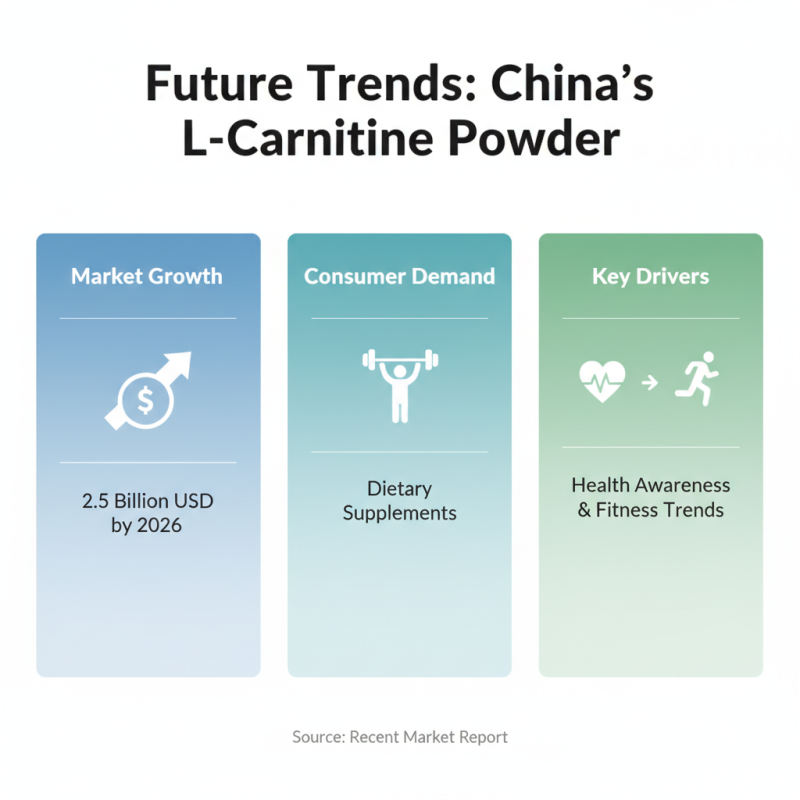
The L-Carnitine powder industry in China is poised for significant growth in the coming years. According to a recent market report, the industry is expected to reach a value of 2.5 billion USD by 2026. This rapid expansion reflects a growing consumer demand for dietary supplements. Increased health awareness and rising fitness trends contribute to this surge.
One notable trend is the rising popularity of vegan and plant-based products. A 2023 survey indicated that about 30% of consumers prefer plant-sourced L-Carnitine. This shift demands suppliers to adapt their offerings. Additionally, innovations in production technology are improving the efficiency and quality of L-Carnitine powder. Yet, challenges remain. Suppliers face increasing competition. Quality control is critical to maintain customer trust.
Furthermore, regulations around health supplements in China are evolving. Stricter compliance measures will be implemented, impacting suppliers and manufacturers. As a result, staying informed about regulatory changes is essential for players in the market. Adapting to these trends is vital for long-term success. The landscape is dynamic, suggesting potential risks for those who do not engage with ongoing developments.