Leave Your Message

Top 10 Wholesale Chondroitin Sulfate Powder Suppliers?

Choosing reliable Wholesale Chondroitin Sulfate Powder suppliers requires more than comparing prices on a spreadsheet. Buyers must examine raw material origin, assay results, production capacity, and documentation. A bright white powder may look acceptable, yet appearance cannot confirm purity or identity. Laboratory evidence matters.

Dr. David Heber, a respected nutrition and supplement expert, has said, “Supplements are not a substitute for a healthy diet.” This reminder also applies to responsible sourcing. A trustworthy supplier should provide a clear certificate of analysis, batch number, microbiological results, heavy-metal testing, and traceability records. Manufacturing standards should be easy to verify, not hidden behind vague claims. Ask for samples.

This Top 10 guide to Wholesale Chondroitin Sulfate Powder suppliers will compare practical factors, including chondroitin content, sodium or calcium form, packaging, minimum order quantities, lead times, and export experience. It will also consider whether suppliers support GMP-aligned manufacturing and consistent batch control. These details affect product development, quality assurance, and customer confidence.

The ranking is not absolute. Market information changes, and supplier data may be incomplete. Some companies publish impressive specifications but offer limited evidence. That deserves caution. Buyers should confirm current certifications directly before signing contracts or approving large orders. Price alone can mislead.

A dependable partnership is built through responsive communication, transparent testing, and repeatable quality. The best supplier is not always the cheapest. It is the one that can prove what it sells, deliver it consistently, and address problems honestly.
Top 10 Wholesale Chondroitin Sulfate Powder Suppliers?

Chondroitin Sulfate Powder: Sources, Structure, and Typical ≥90% Assay

Wholesale chondroitin sulfate powder is commonly sourced from bovine, porcine, or marine cartilage. Some producers use enzymatic processing to improve extraction consistency. Source matters. Animal origin can affect traceability, allergen review, mineral content, and customer acceptance. Marine-derived material may require extra checks for species identification and environmental documentation.

Structurally, chondroitin sulfate is a sulfated glycosaminoglycan made from repeating disaccharide units. Its sulfate groups influence charge, solubility, and interaction with proteins. The exact structure varies with source, molecular weight, and processing conditions.

A typical ≥90% assay should state its testing basis clearly. Is the result calculated on a dry basis or as received? Numbers need context.

A reliable certificate of analysis should include identity testing, assay method, moisture, ash, protein, microbial limits, and batch number. For sensitive applications, buyers may also request heavy-metal and endotoxin data.

I would not approve a bulk lot from assay alone. Testing methods can produce different results, especially when salts, water, or residual proteins are present. Comparing the supplier’s method with an independent laboratory method is a useful, though sometimes overlooked, quality check.

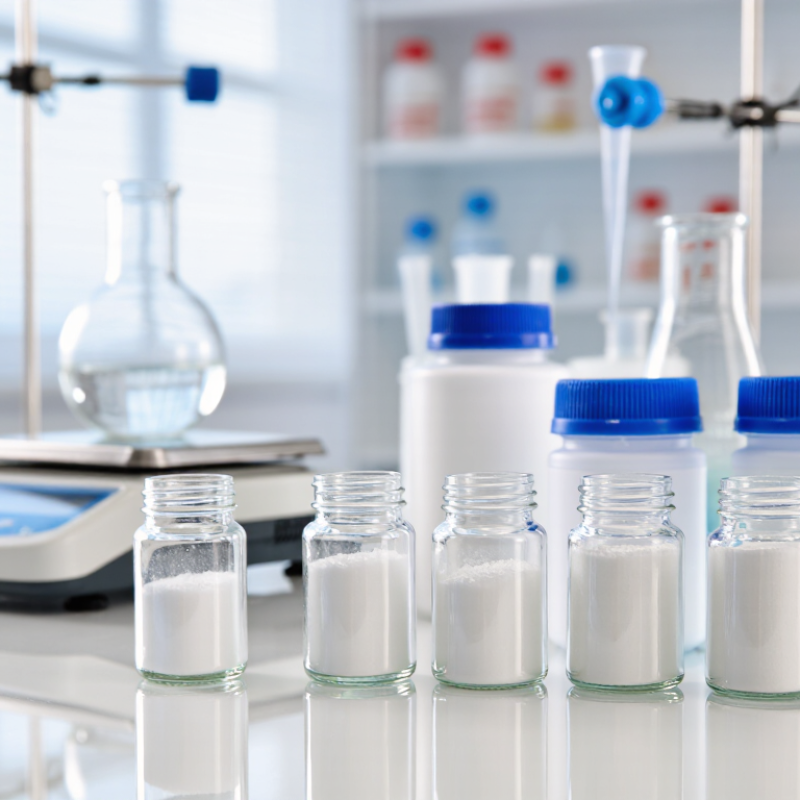
Examine the powder itself: it should show uniform color, controlled particle size, and no damp clumps or unusual odor. Traceability should reach the original material, not stop at the warehouse.

Wholesale Market Data: Demand, Applications, and Key Purchasing Regions

Wholesale Chondroitin Sulfate Powder: Market Demand and Purchasing Regions

Demand for chondroitin sulfate remains closely linked to joint-health supplements. Grand View Research estimated the global chondroitin sulfate market at about USD 1.6 billion in 2023, with steady growth expected through 2030. Forecasts differ by methodology. That matters when comparing wholesale supplier claims. Purchasing teams should check the report date, grade definition, and regional coverage.

Dietary supplements remain the largest application in many market studies. Pharmaceutical formulations require tighter identity, purity, and microbiological controls. Animal nutrition is also expanding, especially for mobility-support products. Cosmetic use exists, but it is usually smaller. Buyers should request assay results, source documentation, particle-size data, and batch traceability. Small details matter.

North America and Europe North America and Europe continue to support strong premium demand.

Asia-Pacific Asia-Pacific is increasingly important for manufacturing capacity and bulk procurement. MarketsandMarkets and Fortune Business Insights both identify Asia-Pacific as a high-growth region, although their revenue estimates vary.

Import rules, delivery time, and storage conditions can change the final cost more than the listed powder price. A practical shortlist of ten suppliers should compare specification consistency, not only quotations. Even experienced buyers can overvalue low prices.

Supplier audits, independent testing, and a retained sample provide better protection against inconsistent batches.

Supplier Ranking Criteria: GMP, ISO 22000, HACCP, and USP-Grade Testing

Top 10 Wholesale Chondroitin Sulfate Powder Suppliers?

A credible ranking starts with evidence, not attractive packaging or fast replies. Each supplier should provide current GMP documentation, preferably supported by recent third-party audits. ISO 22000 confirms a structured food safety system, while HACCP records show how biological, chemical, and physical hazards are controlled. These documents should match the actual manufacturing site and product scope. Otherwise, the certificate means little.

The strongest suppliers provide batch-specific certificates of analysis, not generic templates. I would check identity, assay, moisture, ash, microbiological limits, heavy metals, and residual processing chemicals. USP-grade testing deserves careful wording. It should mean testing against relevant USP requirements or validated compendial methods, not an unverified “USP approved” claim. Laboratories should show methods, equipment details, and analyst authorization. Samples should also match the final commercial batch.

Traceability separates reliable suppliers from merely persuasive ones. Ask for lot numbers, raw material origin, production dates, storage conditions, and recall procedures. A controlled sample room with sealed drums and clear labels is a practical sign of discipline. Supplier rankings may also consider delivery consistency, technical support, and change-notification policies. Still, this method is imperfect. Certificates can expire, audits can miss problems, and a clean sample cannot represent every shipment. I would review new evidence regularly, especially after formulation or facility changes. Fresh documentation matters.

Top 10 Wholesale Suppliers: Capacity, MOQ, Certifications, and Pricing

Wholesale chondroitin sulfate powder suppliers should be compared by capacity, minimum order quantity, certifications, and verified pricing. Grand View Research and IMARC Group report steady market growth, although their market definitions differ. Their estimates suggest continued demand from joint-health supplements and pharmaceutical applications. That difference matters.

A practical top-ten supplier shortlist should include manufacturers producing roughly 20 to 500 metric tons annually. Smaller specialists often accept 25-kilogram trial orders, while larger factories may require 500 kilograms or one metric ton.

Typical bulk quotations range from 45 to 120 US dollars per kilogram, depending on purity, source, testing, and contract volume. Prices move quickly. Treat online figures cautiously.

Certifications should include GMP, ISO 22000, HACCP, and suitable pharmacopoeial testing, such as USP or EP methods. Halal and Kosher documentation may be essential for certain markets.

Ask for recent certificates, batch-specific COAs, heavy-metal results, microbiology data, and identity testing. A supplier claiming 98% purity without chromatographic evidence deserves closer review.

Some reports focus on revenue, not production capacity, so capacity claims require factory records or third-party audits. That is an easily missed weakness.

Also confirm whether the quoted material is bovine, marine, or another permitted source, because origin affects labeling, compliance, and cost.

Quality Verification: Identity, Molecular Weight, Microbes, and Heavy Metals

When comparing wholesale chondroitin sulfate powder suppliers, quality verification should begin with identity, not price. A Fourier-transform infrared spectrum can confirm characteristic sulfate and glycosidic groups. However, infrared testing alone may miss dilution or substitution. The United States Pharmacopeia recommends combining identity testing with chromatographic or compositional procedures where applicable. I would request the original chromatogram, not only a certificate summary.

Molecular weight needs equal attention. Published analytical reviews commonly report commercial chondroitin sulfate fractions across a broad range, often about 10–100 kDa, depending on source and degradation. Size-exclusion chromatography, preferably supported by multi-angle light scattering, gives stronger evidence than a single viscosity result. Ask whether the reported value is weight-average or number-average molecular weight. Suppliers sometimes blur this distinction.

Microbial and elemental controls expose practical weaknesses. USP General Chapters <61> and <62> describe microbial enumeration and specified-organism testing, while USP <232> sets oral daily exposure limits of 5 µg for lead, 15 µg for arsenic, 5 µg for cadmium, and 30 µg for mercury. Testing should use validated methods, with batch-specific results. A 2023 industry quality review also emphasizes traceability from raw material to finished powder. A clean certificate is not proof of consistency. I would still test a retained sample, especially when the powder has a strong odor, unusual color, or unexplained moisture variation.

Top 10 Wholesale Chondroitin Sulfate Powder Suppliers: Quality Verification Benchmarks

A supplier should provide documented verification for identity, molecular weight, microbiological quality, and heavy metals. The chart shows commonly used procurement limits for selected microbial and elemental-contaminant tests; exact specifications vary by pharmacopoeia, application, and buyer agreement.

Identity
Confirm with FTIR, chromatographic comparison, or another validated identification method.
Molecular Weight
Verify by SEC/GPC or an equivalent validated method against the agreed product range.
Microbes
Common examples include TAMC ≤1,000 CFU/g and TYMC ≤100 CFU/g, with specified pathogens absent.
Heavy Metals
Lead, arsenic, cadmium, and mercury limits are commonly stated in ppm and must be confirmed by ICP-MS or ICP-OES.

Reference note: These are representative buyer acceptance benchmarks, not universal legal limits. Always verify the current specification, test method, certificate of analysis, and applicable regional requirements.