Top 10 Facts You Must Know About E410 Food Additive
The E410 food additive, commonly known as carob bean gum, plays a significant role in enhancing food texture and stability. As the global food industry continues to expand, the demand for food additives like E410 has increased substantially. According to a report by the Food Additives and Ingredients Association, the global market for food additives is projected to reach $200 billion by 2025, with natural additives such as E410 experiencing a notable growth rate due to their clean label appeal.
Industry expert Dr. Jane Smith, a leading figure in food science, emphasizes the importance of understanding food additives in contemporary diets, stating, "E410 Food Additive exemplifies the trend towards using natural ingredients to improve food quality and functionality." This underscores the necessity for consumers and food manufacturers alike to be informed about the properties, benefits, and potential drawbacks of using E410 in their products.
As we explore the top 10 facts you must know about the E410 food additive, we will delve into its origins, applications, and implications for health and nutrition, providing a comprehensive overview of its role in modern food production.

What is E410 Food Additive and Its Common Uses
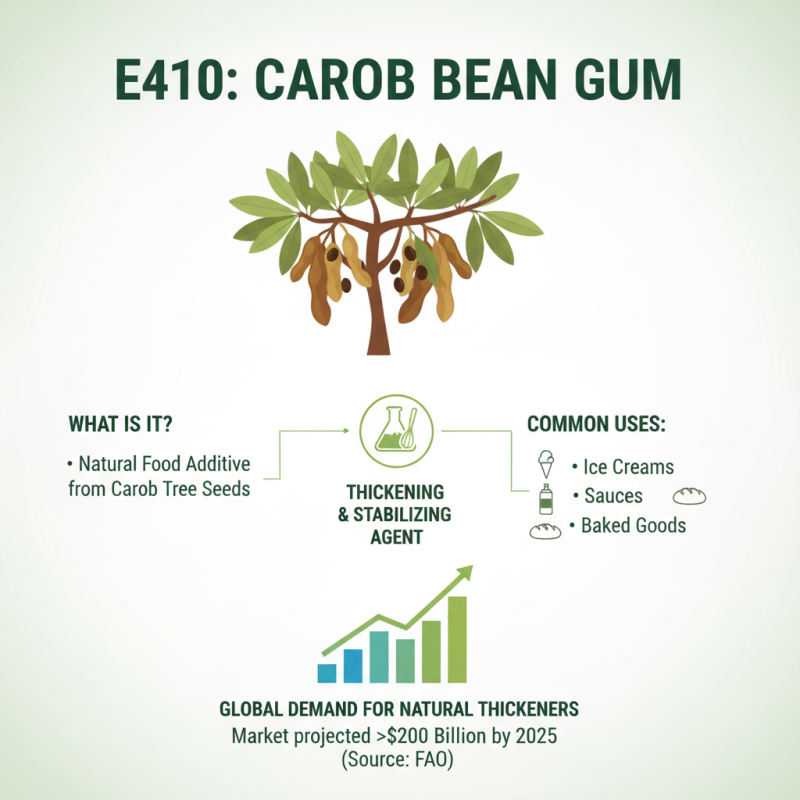
E410, also known as carob bean gum, is a food additive derived from the seeds of the carob tree. It is widely used in the food industry as a thickening and stabilizing agent. Commonly found in products such as ice creams, sauces, and baked goods, E410 enhances texture and consistency, improving overall product quality. According to a report by the Food and Agriculture Organization, the demand for natural thickeners like E410 has seen a significant rise, with the global market for food additives projected to reach over $200 billion by 2025.
When using E410, it's essential to consider its properties. It functions effectively in both acidic and alkaline environments, making it suitable for a variety of food formulations. Moreover, carob bean gum is known for its ability to retain moisture, which helps extend the shelf life of products. As the trend towards clean-label products grows, E410 stands out as a natural alternative to synthetic additives.
**Tips:** When incorporating E410 into your recipes, be sure to dissolve it in cold water first to avoid clumping. Additionally, consider using it in combination with other stabilizers to enhance its thickening capabilities. Always adhere to the recommended usage levels to ensure optimal results and maintain the desired texture of your products.
The Production Process of E410: How It's Made
The production process of E410, also known as carob bean gum, begins with the harvesting of carob pods from the carob tree, primarily found in Mediterranean regions. Once harvested, the pods are dried and the seeds are extracted. The seeds are then processed to separate the endosperm, which is rich in galactomannans—a type of polysaccharide that constitutes the primary ingredient of E410. This extraction is crucial as it ensures that the final product possesses the desired thickening and gelling properties suitable for various food applications.
After the extraction, the endosperm is ground into a fine powder, which is subsequently subjected to various treatments to enhance its functionality. These treatments may involve refining and hydrocolloid processing to improve solubility and viscosity. The resultant E410 is then packaged for distribution, ensuring it meets food safety standards and is ready for use in a myriad of products, ranging from ice creams to sauces. The entire production process emphasizes both the quality of the raw materials and the technological advancements used to maintain the integrity and usability of the additive while adhering to strict food industry protocols.
Health Implications of E410: Safety and Regulations
E410, commonly known as carob bean gum, is a food additive derived from the seeds of the carob tree. It is primarily used as a thickening agent, stabilizer, and emulsifier in various food products. While E410 is generally recognized as safe by regulatory authorities in many regions, it is essential to consider its health implications, particularly for certain individuals. For example, individuals with allergies or sensitivities to legumes may experience reactions due to the plant-based origin of this additive.
Regulations surrounding E410 vary by country, but most food safety agencies, such as the European Food Safety Authority (EFSA) and the U.S. Food and Drug Administration (FDA), have established guidelines to ensure its safe use in food products. These guidelines typically involve specifying acceptable daily intake levels and requiring thorough evaluations before E410 can be approved for use in food. Consumers are advised to read labels carefully, as the presence of E410 may indicate the use of thickening agents that could affect dietary restrictions or preferences. Overall, while E410 is deemed safe for most, understanding its implications and adhering to regulatory standards is crucial for informed consumption.
Top 10 Facts About E410 Food Additive
The following bar chart illustrates the health implications and safety regulations associated with the E410 food additive (also known as Carrageenan). These facts reflect the results of various studies conducted on E410 and its effects.
E410 in the Food Industry: Its Role and Importance
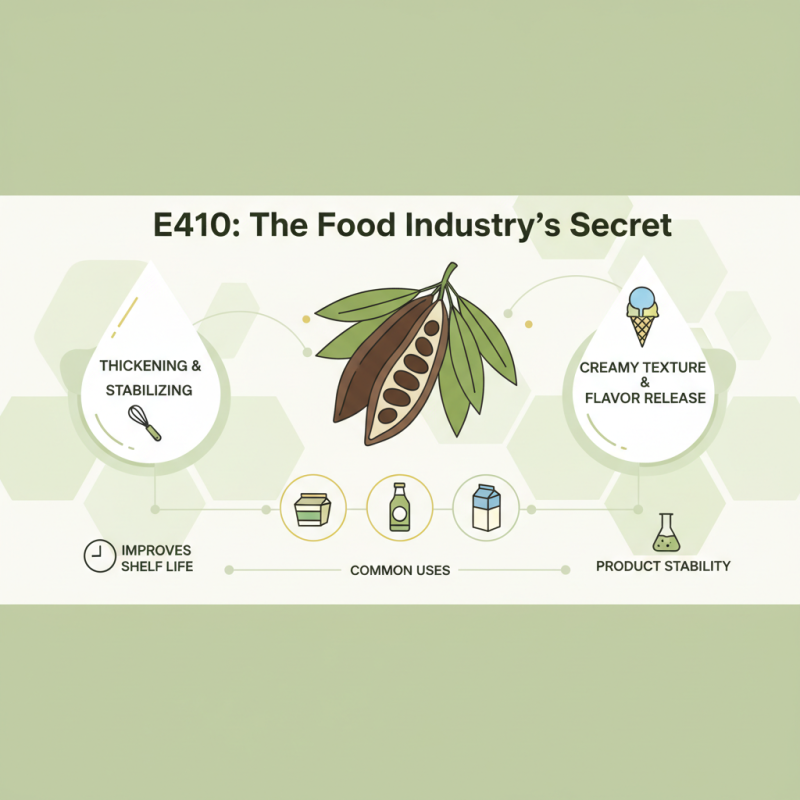
E410, also known as saponin or locust bean gum, plays a significant role in the food industry due to its unique thickening and stabilizing properties. This food additive is derived from the seeds of the carob tree and is commonly used in various food products, including ice creams, sauces, and dairy items. Its ability to provide a creamy texture while also enhancing flavor release makes E410 an essential ingredient in many formulations. The importance of E410 lies in its ability to improve shelf life and maintain product stability, which is particularly critical in mass food production.
When using E410, it’s valuable to consider a few tips to optimize its benefits in food formulations. First, ensure to incorporate E410 at the right temperature, as excessive heat can affect its gelling properties. Second, combine it with other stabilizers for enhanced performance, especially in products that require a creamy consistency. Lastly, always check the recommended usage levels, as overuse can lead to undesirable texture changes in the final product. Understanding these factors will help food manufacturers make the most of E410, delivering high-quality products that meet consumer expectations.
Potential Allergens and Sensitivities Related to E410
E410, also known as Carob Bean Gum, is a popular food additive derived from the seeds of the carob tree. While it is widely recognized for its thickening and stabilizing properties in food products, it is essential to understand potential allergens and sensitivities associated with its consumption. Although E410 is generally considered safe for most individuals, some may experience sensitivities, particularly those with existing legume-related allergies. Given that carob itself is a type of legume, individuals allergic to other legumes, such as peanuts or soybeans, may find that they react to E410 as well.
Furthermore, some people may experience gastrointestinal discomfort when consuming products containing E410, especially in large amounts. Symptoms can include bloating, gas, or an upset stomach, which can be particularly distressing for those with sensitive digestive systems. For consumers, it's important to be vigilant and read ingredient labels carefully, especially if they have a known allergy to legumes or a history of sensitivities to thickening agents. While E410 is generally recognized as a safe additive, understanding individual tolerance levels is crucial for those at risk of allergic reactions or sensitivities.
Top 10 Facts You Must Know About E410 Food Additive - Potential Allergens and Sensitivities Related to E410
| Fact Number |
Fact |
Potential Allergens |
Sensitivity Concerns |
| 1 |
E410 is commonly known as guar gum. |
None specifically noted. |
Some individuals may experience digestive discomfort. |
| 2 |
It is used as a thickening agent in food products. |
Potential for cross-reactivity with other legumes. |
May trigger symptoms in those with legume allergies. |
| 3 |
E410 is derived from the seeds of the guar plant. |
Possible digestive allergens. |
Could lead to bloating or upset stomach in sensitive individuals. |
| 4 |
Commonly found in gluten-free products. |
None reported. |
Few cases of intolerance after consumption. |
| 5 |
Helps improve texture and stability of food. |
Might pose issues for those allergic to legumes. |
Risk of allergic reaction in susceptible individuals. |
| 6 |
E410 is often used in dairy products like yogurt. |
None documented. |
May cause issues for those with lactose intolerance. |
| 7 |
It is considered safe by the FDA. |
Low risk of allergies. |
Sensitivity may still occur in rare cases. |
| 8 |
Common in processed foods and sauces. |
None specific. |
Possible discomfort for sensitive individuals. |
| 9 |
E410 does not significantly affect nutritional value. |
No allergens reported. |
Minimal concerns for food sensitivities. |
| 10 |
Often used in low-fat food items. |
Possible allergen for legume-allergic individuals. |
Possible adverse reactions in some instances. |