Leave Your Message
Coenzyme Q10 has moved from a specialist nutritional ingredient to a widely traded health and wellness compound. Grand View Research reports steady growth in the global CoQ10 market, supported by demand from supplements, functional foods, and pharmaceutical applications. Fortune Business Insights also identifies aging populations and preventive healthcare as important market drivers. These trends are increasing interest in reliable Coenzyme Q10 Powder Factory partners.
Yet, factory selection should involve more than production volume or attractive pricing. Buyers must examine fermentation technology, powder purity, ubiquinone or ubiquinol form, solvent controls, batch consistency, and stability testing. A clean production room, sealed drums, and clearly labeled certificates can reveal more than polished marketing language. ISO 9001, GMP systems, HACCP procedures, and independent laboratory testing provide useful evidence. They do not guarantee perfection.
Dr. Peter H. Langsjoen, a recognized CoQ10 clinician and researcher, has described CoQ10 as “the spark plug of the cell.” This simple comparison explains why manufacturing quality matters. Poor handling can affect potency, oxidation resistance, and formulation performance. However, technical claims still require verification through specifications and test reports.
This guide examines ten Coenzyme Q10 Powder Factory types serving global buyers. It compares their manufacturing strengths, typical product formats, documentation practices, and practical limitations. No ranking is universally correct. A factory suited to a small private-label order may fail a pharmaceutical-scale audit. Buyers should question every assumption, including impressive capacity figures and unusually low prices. Reliable sourcing is built through evidence, repeated communication, and measurable quality controls.
Top 10 Coenzyme Q10 Powder Factory Types for Global Buyers
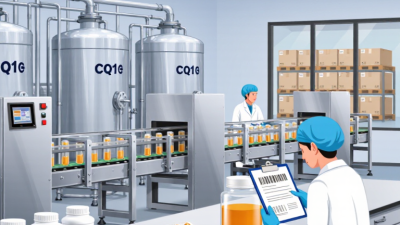
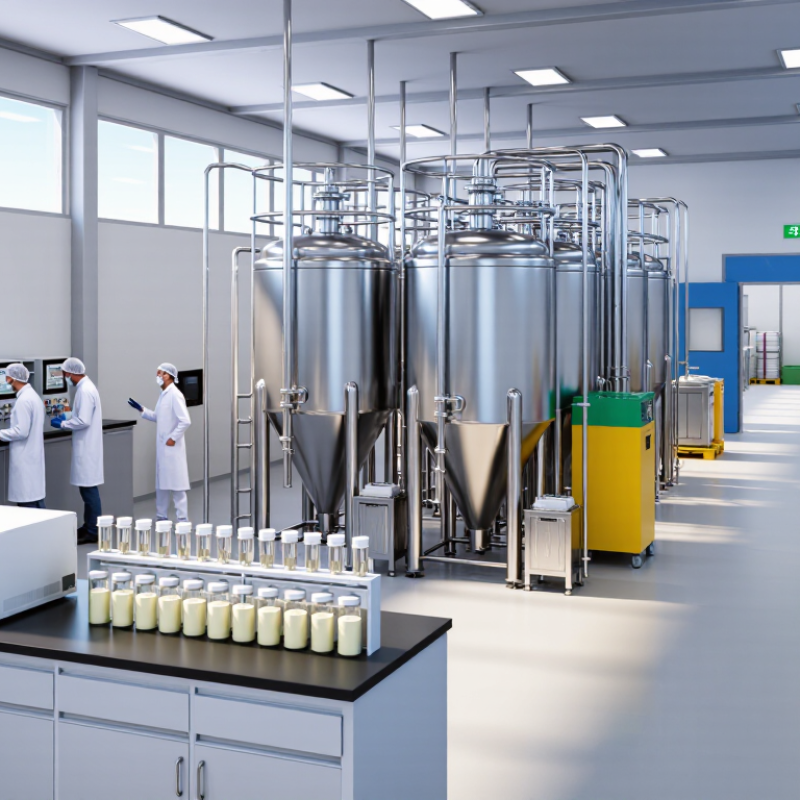
Coenzyme Q10 powder factories differ mainly by their manufacturing model. Vertically integrated plants control raw material processing, crystallization, drying, and final packing. This structure improves traceability and reduces handoff risks. Fermentation-based facilities use controlled microbial processes, while synthetic plants rely on chemical production routes. Buyers should request origin records, batch data, and residual-solvent tests.
Contract manufacturers produce powder for another company under agreed specifications. Toll processors handle selected steps, such as milling, spray drying, or microencapsulation. OEM factories follow a buyer’s formula and packaging instructions. ODM facilities offer ready-developed formulations with adjustable strength, particle size, or dispersibility. Private-label plants focus on finished goods, but their upstream control may be limited. Ask clearly.
Pilot-scale factories support sampling and process validation before commercial production. Specialized nutraceutical plants often provide GMP-aligned rooms, metal detection, and controlled humidity. Microencapsulation facilities can improve powder handling and reduce oxidation exposure, though results depend on the carrier system. Some factories look impressive but provide weak stability evidence. That is a warning. Check certificates, audit reports, specification sheets, and three-batch consistency before approval. A practical factory assessment should also review sieve results, moisture limits, lead times, and deviation records. Mistakes happen. Transparent correction matters more than polished claims.
| Rank | Factory Type | Primary Manufacturing Model | Typical Production Route | Typical Product Formats | Common Customization Options | Typical MOQ Range | Typical Lead Time | Best Suited For |
|---|---|---|---|---|---|---|---|---|
| 1 | Integrated Fermentation Producer | Owns fermentation, extraction, purification, drying, and quality-control operations. | Microbial fermentation followed by extraction, purification, crystallization, and drying. | Crystalline powder, water-dispersible powder, oil-dispersible powder, and stabilized powder. | Assay level, particle size, carrier system, dispersion profile, and packaging format. | 100–500 kg for standard grades; higher for recurring contracts. | 4–10 weeks, depending on inventory and batch planning. | Large supplement, food, and ingredient buyers requiring stable long-term supply. |
| 2 | Synthetic CoQ10 API Producer | Manufactures pharmaceutical or high-purity CoQ10 through controlled chemical synthesis. | Multi-step chemical synthesis, purification, solvent recovery, crystallization, and drying. | High-purity crystalline powder and pharmaceutical-grade intermediate material. | Purity specification, residual solvent limits, particle-size distribution, and analytical package. | 25–250 kg for development or regulated projects; larger for commercial supply. | 6–14 weeks, including testing and release documentation. | Pharmaceutical, clinical nutrition, and buyers with strict impurity controls. |
| 3 | Contract Manufacturing Factory | Produces CoQ10 powder to a buyer’s specification under a contract manufacturing agreement. | Uses qualified raw materials and dedicated or shared processing lines according to an approved specification. | Standard powder, encapsulated powder, beverage-grade powder, and finished bulk blends. | Formula, carrier, assay, packaging, testing plan, labeling, and batch documentation. | 50–300 kg for customized powder programs. | 6–12 weeks after specification and artwork approval. | Importers, supplement manufacturers, and buyers seeking outsourced production. |
| 4 | Toll Processing Factory | Processes customer-supplied CoQ10 or premix materials for a processing fee. | Blending, drying, milling, sieving, agglomeration, or repacking without owning the core ingredient. | Milled powder, blended powder, agglomerated powder, and repacked bulk material. | Particle size, blend uniformity, carrier ratio, sieve specification, and packaging. | 100–1,000 kg, depending on equipment and process complexity. | 2–8 weeks after receipt and approval of customer-supplied materials. | Raw-material owners and buyers that need flexible downstream processing. |
| 5 | Spray-Drying Formulation Factory | Converts oil-soluble CoQ10 into a dry powder with improved handling and dispersibility. | Emulsification or suspension preparation followed by spray drying and powder conditioning. | Water-dispersible powder, beverage powder, emulsion powder, and instantized powder. | Carrier type, dispersibility, particle size, assay, flavor compatibility, and moisture level. | 50–500 kg per formulation or commercial batch. | 5–10 weeks, including pilot trials for new formulations. | Functional beverage, sachet, tablet, and instant-powder manufacturers. |
| 6 | Microencapsulation Specialist | Encapsulates CoQ10 in a protective matrix to improve stability, taste masking, or dispersion. | Matrix formation using suitable wall materials, followed by spray drying, fluid-bed coating, or related encapsulation methods. | Microencapsulated powder, taste-masked powder, controlled-release powder, and dispersible granules. | Encapsulation efficiency, release profile, wall material, particle size, and protection from oxidation. | 25–250 kg for customized or technically demanding products. | 6–14 weeks, depending on pilot and stability requirements. | Premium nutraceutical, food, beverage, and specialized delivery-system applications. |
| 7 | Micronization and Particle-Engineering Factory | Optimizes particle size and powder flow for improved blending, compression, or formulation performance. | Jet milling, pin milling, controlled crystallization, sieving, and powder classification. | Fine powder, narrow particle-size distribution, free-flowing powder, and compression-ready powder. | D50 or D90 target, flowability, bulk density, agglomeration control, and blend uniformity. | 25–300 kg, depending on milling loss and specification. | 3–8 weeks, including particle-size verification. | Tablet, hard-capsule, sachet, and formulation manufacturers with powder-flow challenges. |
| 8 | Nutraceutical Premix and Blending Factory | Combines CoQ10 with carriers, vitamins, minerals, or other ingredients into a uniform bulk premix. | Low-shear or high-shear blending, screening, metal detection, sampling, and bulk packing. | CoQ10 premix, multinutrient powder, capsule blend, tablet blend, and sachet blend. | Ingredient ratio, potency, carrier, flow aid, flavor system, and dosage uniformity. | 100–1,000 kg, with higher quantities for standard premixes. | 3–8 weeks after formula approval and material availability. | Finished-product manufacturers that need ready-to-use CoQ10 ingredient blends. |
| 9 | Pilot and Small-Batch Custom Factory | Provides laboratory, pilot, and limited commercial batches for product development. | Small-scale blending, drying, encapsulation, milling, and process optimization under controlled conditions. | Prototype powder, trial batch, laboratory sample, and scale-up sample. | Formula screening, carrier selection, process parameters, sensory profile, and preliminary stability testing. | 1–25 kg for development; 25–100 kg for pilot production. | 2–8 weeks, depending on testing and iteration cycles. | Start-ups, research teams, and established buyers validating new CoQ10 products. |
| 10 | GMP Bulk Repacking and Regional Finishing Factory | Purchases qualified bulk CoQ10 powder and performs local testing, repacking, labeling, or final blending. | Incoming inspection, batch segregation, repacking, optional blending, and finished-lot release. | Small bags, drums, fiber cartons, resealable packs, and customer-specific bulk packs. | Pack size, language, labeling, lot coding, documentation format, and local compliance support. | 10–100 kg for repacking; 50–500 kg for regular bulk programs. | 1–5 weeks when qualified stock is available. | Regional distributors and buyers needing shorter delivery times or market-specific packaging. |
Note: MOQ, lead time, production route, and customization availability are typical industry ranges for CoQ10 powder manufacturing. Actual values depend on assay, formulation, raw-material availability, testing requirements, destination-market regulations, and factory capacity.