How to Use Refined Locust Bean Gum for Food and Industry?
Refined Locust Bean Gum has gained significant traction in both the food and industrial sectors. As a natural thickening agent derived from the seeds of the carob tree, it plays a vital role in various applications. Reports indicate that the global locust bean gum market was valued at approximately $175 million in 2022, showcasing its growing importance.
In food production, Refined Locust Bean Gum is prized for its ability to improve texture and enhance stability in products. It is often found in dairy items like ice creams and yogurts. One recent study highlighted that manufacturers reported a 30% increase in product shelf life when using this ingredient. However, the ingredient may not always blend seamlessly with all formulations, necessitating careful consideration in development processes.
On the industrial front, Refined Locust Bean Gum is equally beneficial, particularly in creating adhesives and coatings. Its biodegradable properties align well with current trends toward sustainability. Yet, companies must be cautious; quality variations can affect performance in critical applications. Striking a balance between quality and cost remains a challenge for many. This underscores the need for further research and innovation in optimizing its use across diverse sectors.

Understanding Refined Locust Bean Gum: Composition and Properties
Refined locust bean gum, derived from the seeds of the carob tree, holds remarkable properties that make it desirable in food and industry. Its composition includes galactomannans, which provide thickening, gelling, and stabilizing features. This natural gum is soluble in cold and hot water, expanding its versatility. In food applications, it enhances texture and improves mouthfeel in products like sauces and dairy.
However, there are challenges. The viscosity of locust bean gum can vary based on the extraction process. This inconsistency might affect the final product's quality. Producers need to manage these variations carefully. In industrial use, its biodegradable nature makes it an appealing alternative to synthetic additives. Even so, the sourcing and quality control of raw materials can be problematic, leading to supply chain concerns.
When utilizing refined locust bean gum, it is essential to understand its properties fully. Knowing how it interacts with other ingredients and its response to temperature changes is crucial. It can clump if not mixed properly. Suitable formulations require experimentation and adaptation, as not every application behaves the same way. Continuous improvement in processes and practices can lead to better utilization of this natural gum.
Applications of Refined Locust Bean Gum in Food Industries
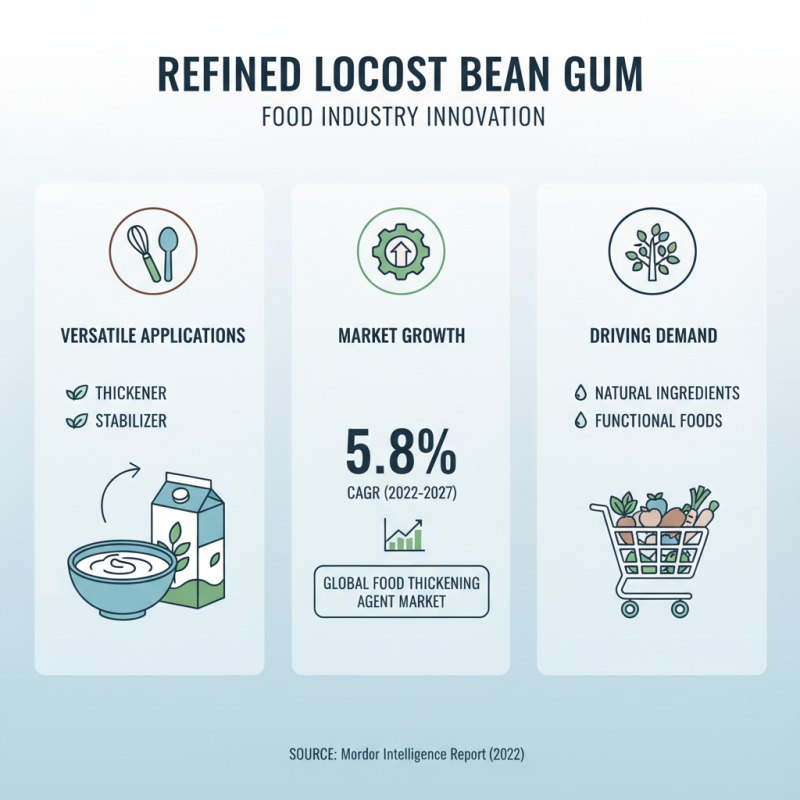
Refined locust bean gum (LBG) is gaining traction in the food industry for its versatile applications. It is mainly used as a thickener and stabilizer. According to a report by Mordor Intelligence, the global food thickening agent market is projected to grow at a CAGR of 5.8% from 2022 to 2027. This growth reflects the increasing demand for natural and functional food ingredients.
In food processing, LBG is favored for its ability to enhance texture and improve mouthfeel. It yields a creamy consistency in dairy products like ice cream and yogurt. Moreover, LBG helps in preventing water separation, which is crucial for maintaining product quality. The ingredient's gelling properties are particularly beneficial in plant-based products, where it mimics the texture of animal-derived ingredients.
Despite its benefits, there are challenges in using refined locust bean gum. Sourcing may not always be consistent, leading to supply chain issues. Additionally, some consumers may have concerns about food intolerances. It's essential for manufacturers to communicate transparently about LBG's sourcing and processing. Awareness can alleviate doubts and boost market acceptance. Balancing these aspects requires ongoing review and adaptation in ingredient use.
Utilizing Refined Locust Bean Gum in Non-Food Industries
Refined locust bean gum is gaining attention beyond the food industry. This versatile ingredient has many applications in non-food sectors. It's particularly valuable in cosmetics, pharmaceuticals, and even textiles. According to a recent industry report, the global market for locust bean gum is projected to reach $177 million by 2025. This statistic reflects a growing awareness of its benefits.
In cosmetics, refined locust bean gum acts as a thickener and emulsifier. It helps create creamy textures in lotions and creams. One study indicates that it effectively stabilizes emulsions, enhancing shelf life. In pharmaceuticals, it serves as a binding agent in tablets. Its unique properties offer a reliable alternative to synthetic polymers.
**Tip:** Always test refined locust bean gum in small batches. This practice helps determine the right texture and stability.
The textile industry is exploring its potential too. Manufacturers are interested in its natural thickening ability for dyes. This could result in softer fabrics and vibrant colors. However, results can vary. Each application might require adjustments and experimentation.
**Tip:** Consider collaborating with experts in formulation. This step can bridge gaps in knowledge and improve the final product.
Best Practices for Incorporating Locust Bean Gum into Products
Refined locust bean gum is a versatile ingredient. It enhances texture and stability in food and industrial products. When incorporating it into recipes, consider the optimal temperature. This ingredient works best when dissolved in warm liquids.
Tips: Always test in small batches. This helps avoid waste and allows adjustments. Locust bean gum can clump. Gradually whisk it into your mixture to ensure a smooth texture.
For industrial applications, consider the viscosity and gelling properties. It can behave differently depending on the combination of other ingredients. Monitor the functionality in different conditions. This is important for product consistency. Mistakes can happen, so keep refining your process.
Usage of Refined Locust Bean Gum in Food and Industry
Safety and Regulatory Considerations for Locust Bean Gum Usage
Locust bean gum is commonly used in both food and industrial applications. Understanding its safety is crucial. This natural thickener is derived from the seeds of the locust bean tree. It can be safe when used appropriately. However, there are some safety considerations to keep in mind. While generally regarded as safe, some individuals may have allergies to legumes. This must be taken seriously, particularly in food production.
Regulatory bodies oversee locust bean gum usage. They ensure the product meets safety standards. It is essential to be aware of these regulations in various regions. For those in the food industry, proper labeling is vital. Transparency about ingredients is necessary for consumer trust. Moreover, sourcing from reputable suppliers can help mitigate risks. Using lapsed or low-quality locust bean gum may lead to safety issues and product flaws.
It's also important to monitor the amounts used in formulations. Overuse can affect the texture and taste. Careful formulation can balance functionality and safety. For industries utilizing this gum, ongoing research into its properties is essential. Understanding its interactions with other ingredients can prevent unexpected outcomes. This requires continuous reflection and reassessment of practices.