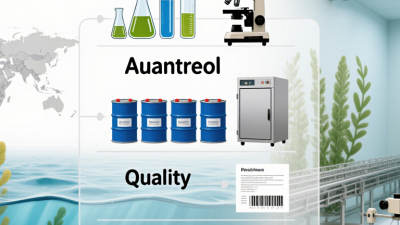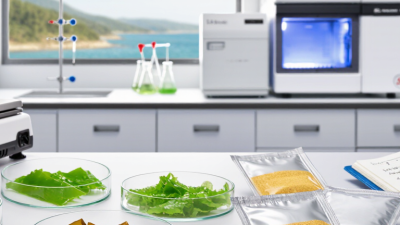
Pure melatonin powder is a concentrated active ingredient used in carefully formulated sleep-support products. It is not merely a white powder. Its identity, potency, purity, and stability require documented testing from qualified laboratories.
Market interest continues to grow. Grand View Research’s 2024 melatonin market analysis identifies rising sleep concerns and expanding supplement demand as important growth drivers. However, market estimates vary because research firms use different product categories and regional assumptions. The National Institutes of Health Office of Dietary Supplements also notes that melatonin research supports several potential uses, but evidence and safety considerations differ by population and duration. This uncertainty matters.
Reliable Pure Melatonin Powder Manufacturers should provide more than attractive specifications. Buyers should review batch-specific certificates of analysis, HPLC assay results, heavy-metal screening, microbial testing, residual-solvent data, and stability information. Manufacturing controls should align with recognized GMP principles and include traceable raw-material sourcing. A clean production room, sealed drums, and clear lot numbers are practical signs of disciplined handling, though appearance alone proves little.
The supplier’s technical team should explain particle characteristics, storage conditions, retest periods, and formulation compatibility. Independent testing can strengthen confidence, especially when documents look unusually perfect. Some claims deserve closer inspection. Regulatory requirements also differ across countries, so responsible manufacturers should support compliant labeling and market-specific documentation without promising approval.
A dependable partnership is built through evidence, not urgency. Ask difficult questions. Verify the answers. This approach helps importers, formulators, and supplement brands reduce quality risks while selecting a manufacturer with genuine technical capability.

Pure melatonin powder is a concentrated form of melatonin, a hormone produced by the pineal gland. The body usually releases it in darkness. This rise helps signal that night has begun.
Melatonin does not work like a strong sedative. It mainly influences the body’s circadian rhythm through MT1 and MT2 receptors. Timing matters. A dose taken at the wrong hour may provide little benefit or shift sleep patterns unexpectedly. Individual responses also vary. Some people report vivid dreams or morning grogginess.
Purity needs careful interpretation. A powder labeled “pure” should have verified identity and measured assay results. Reliable manufacturers can provide batch-specific certificates of analysis, HPLC testing, and contaminant screening. Testing should also address residual solvents, heavy metals, microbes, and moisture. Melatonin powder can degrade when exposed to heat, light, or humidity. Sealed, light-resistant packaging matters.
Look for documented manufacturing controls, traceable raw materials, and stability data. Independent laboratory testing adds credibility. However, paperwork is not proof of perfect quality. Certificates can be incomplete, outdated, or poorly interpreted. That is an easy mistake to make.
Manufacturers should explain their testing methods clearly. They should also provide consistent batch records and responsible storage guidance. Powder requires accurate weighing, so consumer use can create dosing risks. Medical advice remains important, especially for pregnancy, children, chronic conditions, or medicines affecting sleep and blood clotting.
Pure melatonin powder is the isolated compound N-acetyl-5-methoxytryptamine, a hormone naturally produced by the pineal gland. It helps coordinate the body’s circadian rhythm by activating MT1 and MT2 melatonin receptors. The pattern below shows a normalized typical secretion profile; actual levels vary with age, light exposure, sleep timing, and individual biology.
Melatonin production is usually low during daylight, begins increasing in the evening after darkness, reaches its highest level during the middle of the night, and declines toward morning. When evaluating a manufacturer of pure melatonin powder, request a lot-specific certificate of analysis, identity and purity testing, residual-solvent results, heavy-metal and microbiological testing, traceability records, and evidence of current GMP controls.
The chart uses a normalized relative scale rather than clinical blood-concentration values because melatonin secretion differs substantially among individuals and testing methods.
Pure melatonin powder is a crystalline active ingredient, not a finished supplement. PubChem lists its molecular formula as C13H16N2O2 and molecular weight as 232.28 g/mol. It has limited water solubility, so formulation specialists often evaluate particle size, dispersion, and solvent compatibility. The powder should appear uniform, dry, and free from visible agglomerates.
Its common forms include loose powder, capsules, tablets, liquid preparations, and chewable products. These forms require different manufacturing controls. A liquid may need suspension testing, while tablets require content uniformity and dissolution testing. The 2024 Grand View Research market analysis identifies growing demand for melatonin products, supported by consumer interest in sleep-related formulations. Market growth alone, however, does not prove product quality.
Finding a reliable manufacturer requires more than comparing prices. Ask for a recent certificate of analysis, HPLC assay results, residual-solvent data, heavy-metal testing, and microbiological results. Confirm batch traceability and a documented quality system, preferably aligned with recognized GMP requirements. Independent laboratory verification adds useful confidence. Sometimes, it exposes gaps. A clean-looking document may still lack method details or laboratory accreditation. The manufacturer should also explain storage conditions, packaging protection, and stability data. Pure powder can degrade when exposed to light, heat, or moisture. Procurement teams should review local regulatory requirements before approving any application.
Pure melatonin powder requires more than a high assay number. A qualified manufacturer should verify identity using HPLC, FTIR, or another validated method. The United States Pharmacopeia monograph commonly specifies melatonin content near 98.0–102.0% on a dried basis. Buyers should request the full certificate of analysis, not only a one-page summary.
Testing history matters. A 2017 Journal of Clinical Sleep Medicine study examined 31 melatonin supplements. Measured melatonin ranged from 83% below to 478% above label claims. Serotonin also appeared in 26% of tested products. These findings show why independent laboratory testing is essential. The laboratory should hold ISO/IEC 17025 accreditation and use documented sampling procedures. Batch numbers must connect the raw powder, test report, and production record.
Check moisture, residual solvents, heavy metals, microbial limits, and particle uniformity. Packaging should include a tamper-evident seal and clear storage conditions. Light and humidity can weaken powder quality. Ask whether the manufacturer follows current Good Manufacturing Practices and performs stability testing under defined temperature and humidity conditions. A certificate can look reassuring, but it may cover only one batch. That is an important weakness. Review several recent reports, investigate unusual results, and confirm that the manufacturer accepts independent retesting. “Pharmaceutical grade” alone proves little. Traceable evidence matters more.
What Is Pure Melatonin Powder and How to Find Manufacturers
Reliable melatonin powder manufacturers show evidence, not only attractive certificates. Ask for recent certificates of analysis from an independent laboratory. Each report should confirm identity, potency, microbial limits, heavy metals, residual solvents, and moisture. The batch number must match the shipped material. According to a 2017 Journal of Clinical Sleep Medicine analysis, 71% of tested melatonin products differed from their labeled content. This finding makes independent testing essential, especially for high-volume production.
Review the manufacturer’s quality system carefully. Check whether it follows recognized Good Manufacturing Practice principles. Request audit records, equipment-cleaning procedures, stability data, and raw-material traceability. A dependable supplier can explain its sampling plan in plain language. It should also provide controlled storage conditions, sealed packaging, and documented shipping temperatures. A certificate can look reassuring, but it is not proof by itself. Even a strong supplier file may hide a weak production batch.
Tips: Ask for three recent batch reports, not one sample. Verify the laboratory’s accreditation independently. Compare assay results across batches. Visit the facility when possible. Do not rely only on a sales presentation; inspect records and ask difficult questions. Small gaps matter.
| Evaluation Dimension | Verified Technical Information | Evidence to Request | Warning Signs |
|---|---|---|---|
| Chemical Identity | Pure melatonin is the compound N-acetyl-5-methoxytryptamine. Its molecular formula is C13H16N2O2, and its CAS Registry Number is 73-31-4. | A specification sheet and an identity test based on a recognized analytical method. | The documentation does not clearly identify melatonin or uses inconsistent chemical names and numbers. |
| Molecular Weight | The commonly reported molecular weight of melatonin is approximately 232.28 g/mol. | Technical documentation that matches the stated chemical identity and test method. | Conflicting molecular-weight information or a specification that appears copied from unrelated materials. |
| Physical Appearance | Melatonin powder is generally described as a white to off-white crystalline powder. Appearance alone cannot prove purity. | A current product specification, batch photograph where appropriate, and laboratory test results. | Reliance on color, smell, or visual inspection as the only quality test. |
| Assay or Purity | Commercial specifications commonly state a high assay, often around 98% or higher, but the accepted limit must be defined by the buyer’s application and applicable regulations. | A batch-specific certificate of analysis showing the assay result, specification limit, test method, batch number, and testing date. | Only a generic “high purity” claim is provided, with no numerical result or batch linkage. |
| Identity Testing | Identity may be evaluated using techniques such as HPLC retention-time comparison, infrared spectroscopy, ultraviolet detection, or mass spectrometry. | Chromatograms or laboratory results that identify the method, reference standard, acceptance criteria, and sample batch. | The report lists only “passed” without naming the analytical technique or acceptance criteria. |
| Chromatographic Purity Profile | HPLC or UPLC can help quantify melatonin and detect related substances. The method should distinguish the active compound from impurities and degradation products. | A complete chromatogram, method summary, system suitability information, and impurity limits. | A cropped chart, unreadable data, or a purity value without supporting chromatographic evidence. |
| Residual Solvents | Residual solvents can remain after chemical processing. Testing should follow an applicable pharmacopeial or internationally recognized limit system. | A residual-solvent report identifying detected solvents, reporting units, limits, and analytical method. | No solvent information is available, especially when the production process uses organic solvents. |
| Heavy Metals and Elemental Impurities | Elemental impurities should be assessed according to the intended use and relevant regulatory or pharmacopeial requirements. | A test report covering relevant elements, detection limits, results, and the analytical technique, such as ICP-MS or ICP-OES. | A statement that the material is “metal-free” without numerical results or method details. |
| Microbiological Quality | Microbial limits depend on the product category and intended application. Powder intended for oral products should be assessed against the applicable requirements. | Microbial test results for total aerobic count, yeast and mold, and specified microorganisms where applicable. | No microbial testing, unclear sampling procedures, or results without units and acceptance limits. |
| Moisture and Water Content | Moisture can affect powder stability, handling, and shelf life. The specification should define an appropriate limit for the product. | Loss-on-drying or Karl Fischer results, together with the test method and acceptance range. | No moisture specification or evidence of clumping, damp packaging, or uncontrolled storage. |
| Manufacturing Quality System | A reliable facility should operate documented procedures for production, cleaning, deviation management, change control, training, and record retention. | Current quality-system certificates, audit documents, site information, and written quality procedures relevant to the material. | Certificates are expired, unverifiable, issued for a different site, or unrelated to the supplied material. |
| Batch Traceability | Each shipment should be traceable to a defined batch, production date, raw-material records, test results, and release decision. | Matching batch numbers on the packaging, certificate of analysis, invoice, and shipping documents. | The certificate does not match the delivered batch or the supplier cannot explain the origin of the material. |
| Stability and Shelf Life | Shelf life should be supported by stability data under defined storage conditions. Light, heat, oxygen, and moisture control may be relevant during storage. | Stability summary, retest or expiry date, recommended storage conditions, and packaging specifications. | An unusually long shelf life with no supporting data or vague storage instructions. |
| Packaging and Handling | Packaging should protect the powder from contamination, moisture, light, and physical damage during transport and storage. | Packaging description, tamper evidence, inner and outer container materials, labeling, and storage instructions. | Damaged seals, missing labels, unmarked inner bags, or exposure to unsuitable temperature and humidity. |
| Independent Verification | A buyer can reduce risk by sending a representative sample to an independent, competent laboratory before approving a large order. | Independent results for identity, assay, impurities, residual solvents, elemental impurities, and microbiological quality as applicable. | The supplier refuses reasonable pre-shipment testing or attempts to restrict access to laboratory data. |
| Regulatory and Intended-Use Fit | Requirements differ for dietary supplements, pharmaceuticals, research use, cosmetics, and other applications. A material suitable for one category may not meet another category’s rules. | Intended-use statement, applicable regulatory documents, allergen and safety declarations, and country-specific compliance information. | The supplier makes broad compliance claims without identifying the destination market or product category. |
| Supplier Communication and Consistency | Reliable manufacturers provide consistent technical answers, controlled documents, clear lead times, and a defined process for complaints and product recalls. | Written quality agreement, complaint procedure, recall procedure, sample policy, and documented change-notification process. | Specifications change without notice, answers conflict between departments, or quality questions are avoided. |
Note: Acceptance limits should be finalized according to the product’s intended use, destination-market regulations, and the buyer’s quality agreement.
What Is Pure Melatonin Powder and How to Find Manufacturers
Key Questions to Ask Before Choosing a Supplier
Pure melatonin powder is a measured, active ingredient used in compliant formulations. “Pure” should never mean “trust us.” Ask for the exact assay range, chemical identity, and production specification. A reliable supplier should provide a current certificate of analysis for each batch. Check whether an independent laboratory verified the results. Small details matter.
Ask how the manufacturer controls heavy metals, residual solvents, moisture, and microbial contamination. Request testing methods, not only attractive numbers. Can the supplier share batch records and traceability from raw material to sealed container? What quality system is used? Evidence of good manufacturing practices is more useful than vague claims about premium quality. I would also ask how deviations are investigated. Perfect records can still deserve careful questions.
Packaging needs attention too. Is the powder protected from light, heat, and humidity? Does the label show batch number, manufacturing date, retest date, and storage conditions? Ask about minimum order quantities, lead times, sample evaluation, and export documentation. Requirements differ by destination, so confirm them with a qualified regulatory professional. One supplier may answer quickly but provide thin evidence. That is a warning. Compare documents, communication, and consistency across multiple batches. A lower price may reflect weaker testing, although price alone proves nothing. Your review should remain practical, skeptical, and documented.