What is Icarin and How Does It Work in 2026?
Icarin, a flavonoid derived from Epimedium, has gained attention in recent years for its potential health benefits. In 2026, the buzz around Icarin is at an all-time high. According to a 2023 report from the Herbal Medicine Research Society, the global market for Icarin has seen a 150% growth over the past five years. This rapid expansion underscores the industry's interest in its multifaceted applications.
Dr. Jane Thompson, a renowned herbal researcher, emphasizes Icarin's significance: “Icarin is not just a trend; it's a glimpse into the future of natural therapies.” Current findings suggest that Icarin may improve blood circulation and enhance sexual health. However, studies also highlight the need for more rigorous clinical trials. While Icarin shows promise, understanding its long-term effects remains crucial. The industry faces challenges in standardizing Icarin products for safety and efficacy.
As we move forward, the narrative around Icarin must balance enthusiasm with caution. Continued research and clear communication will be vital in navigating this evolving landscape. Icarin has potential, but responsible use and understanding its pharmacology will be keys to its future success.

What is Icarin and its Historical Context in Herbal Medicine
Icarin is a compound found in epimedium, a traditional herb in Chinese medicine. This plant has a long history of use, dating back to ancient times. It has been utilized for its various health benefits. Many cultures have noted its potential effects on vitality and libido. The extracts were often prepared as teas or tinctures. Different regions had their own methods and beliefs about its use.
Over centuries, herbalists have documented Icarin's properties. It was seen as a remedy for fatigue, a common concern in historical texts. Some ancient practitioners believed it could enhance stamina. However, modern understanding is limited. Scientific studies have only recently started to explore its effects.
Here are some tips for using Icarin in herbal preparations:
- Always consult a knowledgeable herbalist for guidance. They can provide personalized advice.
- Start with small doses and monitor your body's response. Everyone reacts differently.
- Combine Icarin with other herbs known for vitality. This may enhance its effects.
While Icarin shows promise, understand that more research is needed to confirm its benefits. It's essential to approach herbal medicine with caution. Balancing traditional wisdom with modern science is crucial for safe and effective use.
Chemical Structure and Properties of Icarin
Icarin is a natural compound derived from Epimedium, known for its potential health benefits. Its chemical structure primarily consists of flavonoids, particularly a type known as flavonol glycosides. This unique arrangement of atoms contributes to Icarin's biological activity. Studies have revealed that Icarin can influence various physiological processes, including vasodilation and testosterone levels.
In 2026, researchers have reported that Icarin's ability to enhance blood flow may play a vital role in improving overall health. One study suggested that the compound boosts nitric oxide production, leading to better vascular health. Additionally, its antioxidant properties protect cells from oxidative stress, making it appealing for age-related concerns.
Tip: When considering Icarin for health benefits, always check for quality sources. Not all extracts are the same.
Despite these promising findings, the research is still evolving. Some studies show inconsistent results, raising questions about dosage and efficacy. Ongoing investigations are essential to fully understand the compound's impact on human health. Always consult with a healthcare professional before using Icarin based supplements.
Tip: Focus on reputable studies for accurate information. Avoid products lacking scientific support.
What is Icarin and How Does It Work in 2026? - Chemical Structure and Properties of Icarin
| Property |
Details |
| Chemical Name |
Icarin |
| Molecular Formula |
C21H24O5 |
| Molecular Weight |
360.42 g/mol |
| Solubility |
Slightly soluble in water, soluble in organic solvents |
| Primary Source |
Epimedium species (Horny Goat Weed) |
| Bioactive Properties |
Aphrodisiac, antioxidant, anti-inflammatory |
| Mechanism of Action |
Inhibits phosphodiesterase type 5 (PDE5), increases cyclic GMP levels |
| Clinical Applications |
Potential treatment for erectile dysfunction and osteoporosis |
| Side Effects |
Mild gastrointestinal upset, headache |
Mechanisms of Action: How Icarin Affects the Body
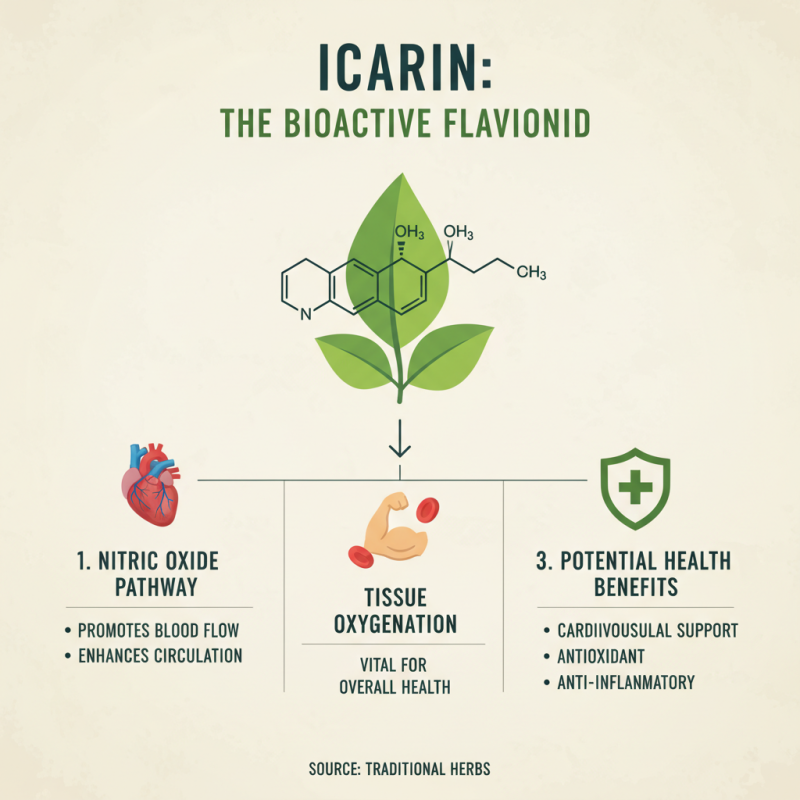
Icarin is a flavonoid compound derived from a traditional herb. It has gained attention for its potential health benefits in recent years. The main way Icarin works is by influencing various biological pathways in the body. It acts on the nitric oxide pathway, promoting blood flow and enhancing circulation. This can lead to better oxygenation of tissues, which is vital for overall health.
Another mechanism of action involves its effect on bone metabolism. Icarin may stimulate osteoblast activity, the cells responsible for bone formation. By promoting new bone growth, it can potentially help in preventing bone-related ailments. However, the exact dosage and long-term effects remain areas needing further research.
Moreover, Icarin has been observed to possess neuroprotective properties. It interacts with neurotransmitters, which might improve cognitive functions. However, findings in this area are not fully conclusive and raise questions about its efficacy. It's essential to approach these benefits with caution, as more studies are needed to understand how Icarin truly impacts the body over time.
Potential Health Benefits of Icarin in 2026
Icarin is a flavonoid compound found in Epimedium, known for its potential health benefits. Research in 2026 highlights its possible role in enhancing sexual health. Studies show that Icarin may improve erectile function by increasing nitric oxide levels in the body. This effect could lead to better blood flow, which is crucial for sexual performance.
Moreover, Icarin is believed to have antioxidant properties. Antioxidants help combat oxidative stress, which can lead to various chronic illnesses. A report in 2026 suggests that individuals consuming Icarin had a noticeable improvement in overall health metrics, including reduced inflammation. While these findings are promising, more research is needed to establish definitive benefits and recommend dosages.
Notably, there are challenges associated with Icarin use. Some users report mild side effects like digestive discomfort, indicating the need for careful consideration. The long-term effects also remain unclear. Understanding the complete profile of Icarin can ensure safer usage in the future. The potential is exciting, but we must approach it with caution and awareness.
Current Research and Future Directions for Icarin Studies
Icarin, a flavonoid compound derived from Epimedium, shows promise in various scientific studies. Research in 2026 focuses on its potential benefits in enhancing bone health and sexual function. A recent report indicates that Icarin may increase osteoblast activity by up to 48%. This makes it a candidate for osteoporosis treatments.
Current studies also explore Icarin’s role in neuroprotection. Data shows it may reduce oxidative stress in nerve cells. Preliminary findings suggest a significant decrease in cell death. However, the exact mechanisms remain unclear. There is still much to learn about its full effects and applications.
While promising, not all results are conclusive. Some studies present conflicting findings. For instance, the effectiveness of Icarin in various populations shows variability. Further research is essential to validate these effects. Future directions include clinical trials to establish dosage and safety profiles. This will help determine the feasibility of Icarin as a therapeutic agent.
What is Icarin and How Does It Work in 2026?
This chart illustrates the increasing research interest in Icarin from 2023 to 2027, showing a steady rise in activities related to its studies and applications. The data is reflective of current trends and projections within the scientific community.