Best E 410 Food Additive Insights for 2026 Canton Fair?
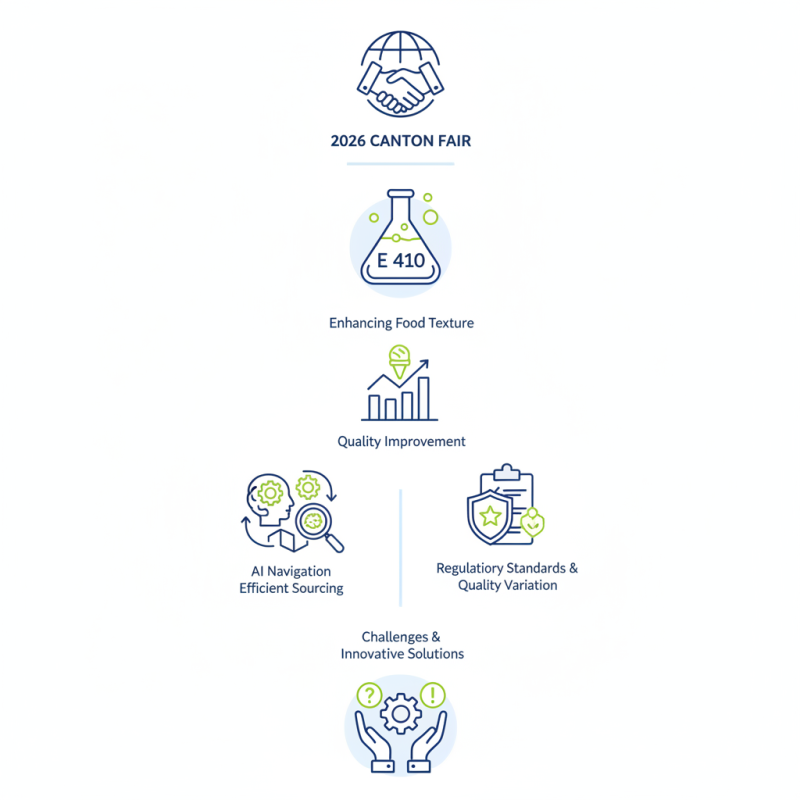
The 2026 Canton Fair is poised to be a critical platform for the food industry, particularly in the realm of food additives like E 410. Dr. Anna Mayfield, a leading expert in food technology, emphasizes, "E 410 plays a vital role in enhancing food texture." Her insights will guide suppliers and buyers alike during this major event.
As the fair introduces advanced AI technology for navigation, attendees will efficiently locate E 410 suppliers. This innovation promises to streamline the process of sourcing quality additives, aligning with the fair’s focus on high-quality products. Exhibitors will showcase their latest offerings, aiming to engage with international buyers seeking reliable suppliers.
Yet, the road to successful trade relationships can be challenging. Not all E 410 products are created equal; the quality varies significantly. Therefore, manufacturers must strive for excellence while navigating regulatory standards. The 2026 Canton Fair serves as an opportunity to reflect on these challenges and find innovative solutions in the food additive industry.
Overview of E 410 Food Additive: Properties and Uses
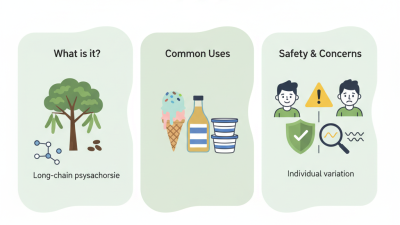
E 410, also known as locust bean gum, is a natural thickening agent derived from carob seeds. This additive plays a significant role in the food industry. It enhances texture and stability in various products, from dairy to bakery. E 410 helps control viscosity, ensuring products maintain their desired consistency, even under varying conditions.
One notable property of E 410 is its ability to work well in both acidic and neutral environments. This versatility makes it a popular choice in many formulations. However, not all end products utilize it optimally. Some manufacturers struggle with the right balance, affecting the final quality. Understanding its interactions with other ingredients is crucial for effective application.
While E 410 offers many benefits, its use requires careful consideration. Over-reliance on additives can lead to product inconsistencies. Consumers may prefer cleaner labels, prompting businesses to rethink their strategies. This is an area that needs reflection, as the demand for transparency grows. Identifying and addressing these challenges will be essential for success in the evolving food landscape.
Best E 410 Food Additive Insights for 2026 Canton Fair
| Property |
Description |
Common Uses |
Regulatory Status |
| Chemical Name |
Sodium Alginate |
Thickener, stabilizer in food products |
Generally Recognized As Safe (GRAS) |
| Appearance |
Light brown to yellowish powder |
Used in ice cream, salad dressings |
Approved by FDA, EFSA |
| Solubility |
Soluble in cold water |
Used in jellies and desserts |
No restrictions in EU |
| Functionality |
Emulsifier and stabilizer |
Improving texture in food products |
Permitted in most jurisdictions |
| Source |
Extracted from brown seaweed |
Natural food additive |
Non-GMO recognized |
Importance of E 410 in Food Industry and Regulations
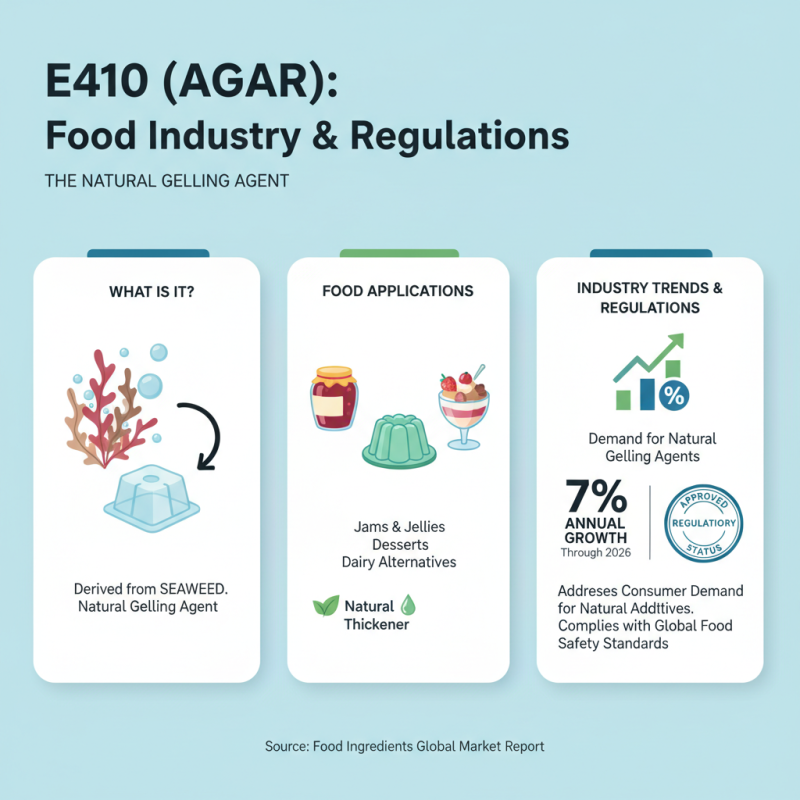
E410, more commonly known as agar, plays a critical role in the food industry. This gelling agent is derived from seaweed, widely used in jams, jellies, and desserts. According to a recent report by the Food Ingredients Global Market, the demand for natural gelling agents like E410 is expected to grow by 7% annually through 2026. This rise highlights the increasing consumer preference for natural over synthetic additives.
Regulations surrounding E410 are significant. In the European Union, E410 is approved as a safe food additive but is subject to specific usage limits. Some studies indicate potential health concerns when consumed in large amounts. For instance, excessive intake can lead to gastrointestinal issues. The industry must tread carefully. Awareness about these limits can guide manufacturers in their formulations, ensuring consumer safety.
The importance of transparency in labeling is rising. Consumers want to know what they are eating. As regulatory frameworks evolve, companies may face pressure to disclose more information about E410. This could lead to a decrease in its use due to safety concerns. The food industry must adapt to these changes while balancing consumer demand and regulatory compliance.
Market Trends and Forecasts for E 410 by 2026
As the 2026 Canton Fair approaches, the E 410 food additive market is showing dynamic trends. E 410, also known as tara gum, serves various applications in the food industry, primarily as a thickening agent and stabilizer. According to recent market analyses, the E 410 sector is expected to experience a compound annual growth rate (CAGR) of around 5% through 2026. This growth is driven by an increasing demand for natural food additives.
The rise of health-conscious consumers is influencing market dynamics. Data from researchers indicate that consumer preference is shifting towards natural and organic products. This trend is expected to bolster the demand for E 410, especially in dairy and bakery products. Despite this positive outlook, challenges remain. Production inconsistencies and quality control issues with E 410 can hinder market expansion. Companies need to invest in better sourcing strategies. Focusing on sustainable solutions will also be crucial, as environmental concerns grow.
Market forecasts suggest that E 410 applications will expand into new food sectors, including plant-based alternatives. Companies that adapt quickly to these changes may gain a competitive edge. However, industry players must also consider regulatory factors that could impact growth. In summary, while the outlook for E 410 is promising, reflection on production practices and market positioning is essential for sustained success.
Key Suppliers and Innovations in E 410 Production
E 410, also known as carob bean gum, is gaining attention for its wide applications in food production. At the upcoming 2026 Canton Fair, key suppliers will showcase innovations in this food additive. These suppliers focus on delivering high-quality, sustainable solutions for the food industry.
Recent trends highlight a shift towards natural additives. There’s a growing demand for products that enhance texture without sacrificing health benefits. Suppliers will likely introduce new processing methods that improve the yield and functionality of E 410. Innovations could include cleaner production processes or improved blending techniques.
However, challenges remain in sourcing quality raw materials. Not every supplier can guarantee consistency. Some products still lack precise labeling, which can lead to confusion. It's essential for consumers and manufacturers to question the origin and quality of E 410. Clear communication from suppliers can help build trust and understanding in this evolving market.
Insights from the 2026 Canton Fair on E 410 Applications
The 2026 Canton Fair highlighted the versatile applications of E 410, also known as carob bean gum. This natural thickener and stabilizer has gained traction in various food sectors. Reports indicate that the global E 410 market is expected to grow by 7% annually from 2024 to 2030. Promoting innovation will help manufacturers meet evolving consumer needs.
At the fair, industry experts showcased innovative uses of E 410 in dairy products and sauces. Its unique gelling properties enhance product textures without compromising flavor. However, some challenges remain. Cost fluctuations of raw materials can affect production. Manufacturers need to adapt strategies to ensure consistent supply.
Sustainability has emerged as a focal point. Consumers demand eco-friendly options, pushing for sustainable sourcing of E 410. Presentations revealed the importance of transparency in ingredient sourcing. There's still room for improvement in education about E 410’s benefits. The industry must address misconceptions and promote positive narratives around this additive. Emphasizing its origins can build trust among consumers.