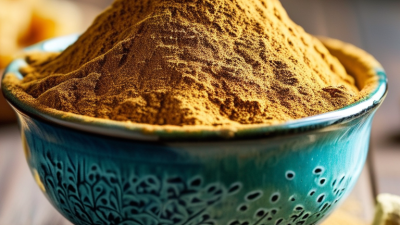
Choosing the 2026 best type of Copper Sodium Chlorophyllin requires more than comparing price, color, or supplier promises. This green copper complex can appear as a fine powder, a darker granular material, or a customized grade. Each form may behave differently in water, beverages, supplements, and personal-care products. Solubility matters. Stability matters more.
Dr. David Julian McClements, a respected food scientist at the University of Massachusetts Amherst, offers a useful formulation principle: “Ingredient performance depends on the whole formulation, not one impressive label.” That observation fits Copper Sodium Chlorophyllin especially well. A vivid green sample is not automatically the strongest choice. Buyers should examine copper content, chlorophyllin assay, moisture, particle size, microbiological results, heavy-metal testing, and batch consistency. A transparent certificate of analysis is essential. So is traceable manufacturing documentation.
The best type in 2026 will likely depend on the intended application. A beverage manufacturer may need rapid dispersion and minimal sediment. A capsule producer may prioritize flowability, low moisture, and stable potency. A cosmetic formulator may focus on shade, odor, and compatibility with emulsions. These differences are easy to overlook. That is the weak point in many buying guides.
Real-world testing should accompany laboratory specifications. Observe the powder under ordinary warehouse light. Check how it disperses after gentle stirring. Monitor color changes over several weeks. Some conclusions may remain uncertain, especially when suppliers disclose limited stability data. Therefore, responsible selection means balancing documented quality, practical performance, supplier expertise, and compliance with applicable food, supplement, and cosmetic regulations.
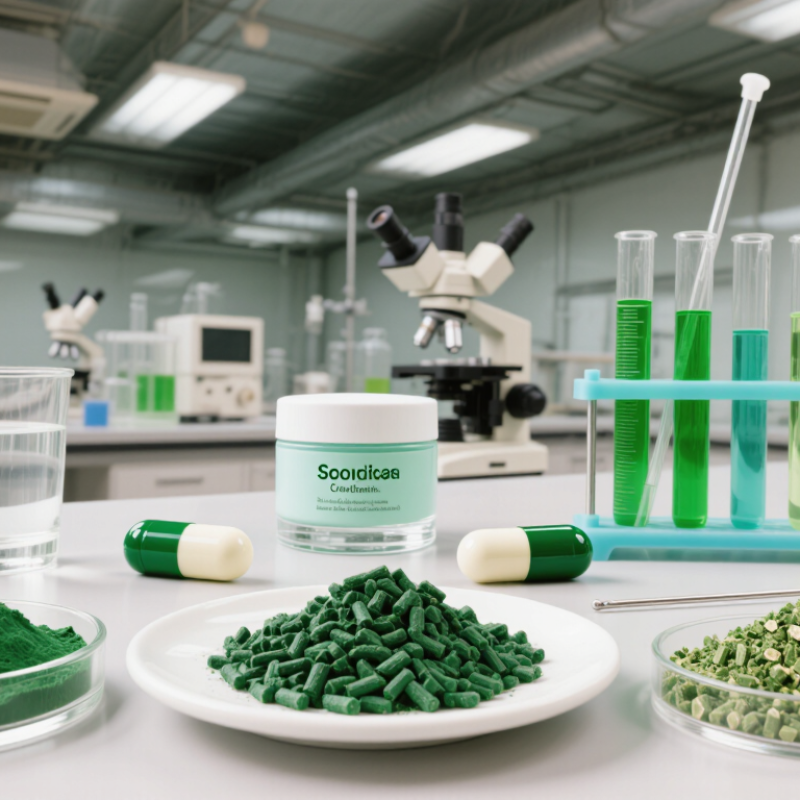
Copper sodium chlorophyllin is a water-soluble, copper-stabilized chlorophyll derivative. Its commonly listed CAS number is 11006-34-1. In European food regulations, E141(ii) identifies copper complexes of chlorophylls. The compound usually appears as a dark green powder, dissolving more easily than natural chlorophyll in water.
FAO/WHO JECFA monographs emphasize identity, purity, copper content, and manufacturing controls for chlorophyll-related color additives. The Codex General Standard for Food Additives lists INS 141(ii) as a permitted colouring agent in selected food categories.
These references matter because “best” should mean food-grade quality, not simply the brightest green shade. Reliable purchasing requires a current certificate of analysis, heavy-metal testing, microbiological results, and confirmation of the exact CAS description.
One practical weakness remains: commercial materials can differ in carrier salts, moisture, and colour strength. A label alone cannot reveal that.
Tips: Check E141(ii) or INS 141(ii) status for the target market. Ask for batch-specific testing. Confirm copper levels. Store the powder sealed, dry, and away from strong light. Do not assume higher colour intensity means better quality. For supplements, food use, or cosmetics, the required specification may differ, so technical review is still necessary.

The best copper sodium chlorophyllin in 2026 should be judged by measured specifications, not color intensity alone. Production usually starts with leafy-plant chlorophyll extraction. Saponification converts chlorophyll into chlorophyllins, followed by controlled copper insertion and sodium neutralization. Drying then creates a dark green powder. Small process changes matter.
The FAO/WHO JECFA specification reports copper chlorophyllins with approximately 4.0–6.0% copper, calculated on a dry basis. This range helps confirm proper copper complex formation. It does not prove purity by itself. A reliable quality file should include assay results, residual solvents, heavy metals, microbiological limits, and identity testing. The Food Chemicals Codex also supports using validated analytical methods rather than visual inspection. ICP-OES can measure total copper, while chromatographic testing helps assess chlorophyllin-related purity. Results should be traceable to calibrated reference materials.
Solubility is equally practical.
A suitable grade should dissolve in water without obvious sediment, floating particles, or strong color streaks. Test it at a defined concentration and temperature. Many commercial specifications place aqueous pH near 9.0–11.0, but the exact range depends on formulation and test conditions. This needs attention. An alkaline powder can dissolve well yet perform poorly in an acidic beverage. Batch records should therefore state pH, concentration, temperature, and mixing time. Buyers should request recent certificates of analysis, not recycled templates. Even a clean-looking sample can hide inconsistent copper distribution or incomplete neutralization.
In 2026, the best copper sodium chlorophyllin grade depends on its final use, not simply its assay. A reliable specification should identify the Color Index reference, copper content, purity, moisture, and microbial limits. CI 75810 is commonly associated with copper chlorophyllin products, but the number alone proves little. Ask for recent batch data and validated testing methods.
For food applications, prioritize strong color yield, controlled odor, and stability across the intended pH range. A practical sample test uses a clear solution, gentle heating, and short light exposure. Record fading, sediment, and shade changes. Cosmetic grades may need finer dispersion and lower insoluble matter. Oral-care formulas require careful compatibility testing with flavors, salts, and preservatives. The brightest sample is not always the most stable one.
Light, oxygen, heat, and acidic conditions can gradually weaken the green shade. Opaque packaging and oxygen control may help, but they cannot repair a poorly manufactured grade. In my experience, application trials reveal problems that certificates miss. A supplier may provide excellent paperwork, yet the powder can disperse unevenly in a real formula. That weakness deserves attention. Choose a grade with traceable production records, independent contaminant testing, and consistent color across several lots. Stability data should reflect your process, not only laboratory storage. There is no universal “best” grade, and treating one as universal can create expensive reformulation work.
For 2026, the strongest choice is a food-grade copper sodium chlorophyllin with clear specifications. The label should identify the additive as sodium copper chlorophyllin and state its intended use. Colour intensity alone proves little. A pale green powder may be properly made, while a vivid sample may still contain unwanted residues.
Safety depends on exposure, purity, and local rules. Some international evaluations describe an ADI as “not specified,” meaning no numerical limit was considered necessary under expected use conditions. This does not mean unlimited intake is safe. It also does not replace a national assessment. Children, frequent users, and people with copper-handling disorders deserve extra caution.
A reliable supplier should provide recent batch testing, preferably using ICP-MS or an equivalent validated method. Ask for results for lead, arsenic, cadmium, and mercury, plus copper content and microbiological quality. Limits differ between jurisdictions and product categories, so one certificate cannot satisfy every market. Food-additive specifications, good manufacturing practice, purity criteria, and contaminant rules should all be checked together.
In practical review work, I would also compare the certificate with the actual lot number. Documents can look perfect. Sampling can still be imperfect. That uncomfortable gap deserves attention. A product with traceable testing, controlled copper levels, and transparent regulatory documentation is generally a more defensible choice than one marketed only for its bright colour.
For 2026, the best copper sodium chlorophyllin is not simply the brightest green powder. It should offer stable color, controlled copper content, and complete batch traceability. In practical purchasing, a supplier’s COA deserves more attention than a polished product photograph. Check assay, moisture, ash, pH, microbiological limits, and heavy metals. Each result should show units, test methods, specification limits, and the actual batch number.
Look for independent laboratory testing under ISO/IEC 17025, especially for elemental impurities. USP General Chapter <233> describes two validated procedures for elemental analysis, including ICP-based testing. ICH Q3D also evaluates 24 elemental impurities, giving buyers a useful risk-control framework. The European Union’s specifications for food colour E141(ii) provide another technical reference for copper chlorophyllins. These documents do not replace local requirements, but they make vague COA claims easier to challenge.
Traceability must reach beyond the finished bag. Request raw-material origin, production date, retest date, processing records, packaging details, and shipment conditions. A reliable supplier should connect every result to a retained sample. Ask whether each batch receives fresh testing or merely repeats an old report. That distinction matters. Some COAs look complete but lack chromatograms, laboratory signatures, or method detection limits. I have seen buyers accept inconsistent color because the paperwork seemed professional. That was a costly assumption. Require a pre-shipment sample, compare it with the COA, and record any deviation before approving the supplier.