Leave Your Message

2026 Best Calcium Ascorbate Powder Supplier for Buyers

Choosing the 2026 Best Calcium Ascorbate Powder Supplier requires more than comparing prices or browsing polished websites. Buyers need dependable evidence, consistent quality, and practical communication throughout the purchasing process.

A qualified Calcium Ascorbate Powder Supplier should provide clear specifications, batch records, certificates of analysis, and suitable packaging details. Buyers should review calcium and vitamin C content, appearance, solubility, moisture, microbiological limits, and storage conditions. Independent laboratory testing can confirm important results. It is not always necessary, but it strengthens confidence when documentation seems incomplete.

Look closely at manufacturing experience. Ask about production capacity, quality systems, traceability, sampling procedures, and response times for technical questions. A reliable supplier should explain how each batch is identified and protected from moisture during transport. Small details matter. A sealed inner liner, readable label, and stable pallet can prevent avoidable problems.

Regulatory expectations differ by market, so buyers must verify local requirements before placing an order. Supplier claims should never replace professional review or laboratory confirmation. Some suppliers appear impressive online but offer limited technical support after payment. That weakness is easy to miss.

The best choice may not be the cheapest quotation. It may be the supplier that communicates clearly, keeps records accurately, and handles quality concerns without delay. Still, no evaluation is perfect. Product needs, budget, and import conditions can change the final decision. Careful comparison helps buyers build a safer, more transparent, and more reliable calcium ascorbate supply chain in 2026.

2026 Best Calcium Ascorbate Powder Supplier for Buyers

Calcium Ascorbate Powder: Definition, Benefits, and Common Uses

Calcium Ascorbate Powder: Definition, Benefits, and Common Uses

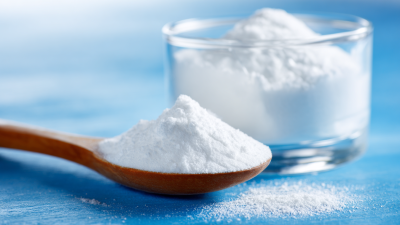
Calcium ascorbate powder is a buffered form of vitamin C. It combines ascorbic acid with calcium, creating a less acidic ingredient for selected formulations. The powder usually appears white or off-white, with a mild, slightly salty taste. It dissolves best in dry, controlled production environments. Moisture can cause clumping.

Its main benefit is vitamin C delivery with lower acidity than pure ascorbic acid. This may suit people who experience stomach discomfort from acidic supplements, although individual tolerance varies. The National Institutes of Health Office of Dietary Supplements recommends 75 milligrams daily for adult women and 90 milligrams for adult men. It also sets 2,000 milligrams as the adult upper limit from all sources. More is not automatically better.

Manufacturers use calcium ascorbate in powdered drink mixes, tablets, capsules, nutrition bars, and fortified foods. It also supports collagen formation, iron absorption, and normal immune function. The European Food Safety Authority recognizes vitamin C’s role in these physiological processes. Ingredient buyers should review assay results, calcium content, particle size, moisture, microbiological limits, and packaging protection. Reported specifications can differ between suppliers. That matters. A low price may hide weaker testing or unstable storage performance. I would request a recent certificate of analysis, production traceability, and a small batch sample before approving regular supply.

Calcium Ascorbate Powder: Definition, Benefits, and Common Uses

Calcium ascorbate is a buffered, non-acidic form of vitamin C that combines ascorbic acid with calcium. The chart shows the theoretical nutrient contribution of 1 gram of anhydrous calcium ascorbate, calculated from its molecular composition.

One gram of anhydrous calcium ascorbate contains approximately 903 mg of vitamin C equivalent and 103 mg of calcium. These values represent about 1,003% of the adult Daily Value for vitamin C and 8% of the adult Daily Value for calcium, based on Daily Values of 90 mg and 1,300 mg, respectively. Actual powder specifications may vary by hydration level, purity, and formulation.

Common Uses

  • Formulation of vitamin C dietary supplements
  • Use in buffered vitamin and mineral powders
  • Food and beverage fortification where a less acidic vitamin C source is preferred
  • Antioxidant applications in nutritional and functional food products

Key Quality Standards for Calcium Ascorbate Powder Suppliers

2026 Best Calcium Ascorbate Powder Supplier for Buyers

Reliable calcium ascorbate powder suppliers show quality through consistent, verifiable details. Buyers should request a current certificate of analysis for every production lot. The document should identify assay, calcium content, moisture, particle size, and microbiological limits. Heavy metal results also deserve careful review. Numbers matter. A supplier should explain testing methods, laboratory qualifications, and acceptance limits clearly.

Manufacturing controls reveal more than attractive product specifications. Look for documented GMP practices, controlled storage, calibrated equipment, and batch traceability from raw material to finished powder. Packaging should protect the powder from moisture, light, and contamination. Ask for stability data under realistic temperature and humidity conditions. A small change in flowability can affect blending, filling, and final product uniformity.

Independent laboratory verification strengthens supplier credibility, especially for new purchasing relationships. Buyers should compare retained samples with later shipments, rather than trusting one successful delivery. I have learned not to treat a neat COA as complete proof. It may confirm the tested batch, but not every future batch. Request audit records, deviation procedures, allergen statements, and clear recall communication. Response speed matters too. A technically strong supplier that answers vaguely can still create costly delays. Suppliers should also disclose changes in materials, processing, or testing without hiding behind general quality language.

How to Evaluate a Calcium Ascorbate Powder Manufacturer

How to Evaluate a Calcium Ascorbate Powder Manufacturer

Choosing a calcium ascorbate powder manufacturer requires more than comparing prices. I examine production experience, quality systems, and documentation before discussing long-term supply. A polished website is not proof. Ask for recent certificates of analysis, batch records, and clear specifications for vitamin C content, calcium content, moisture, and particle size.

Reliable manufacturers can explain their testing methods without vague language. Request results for heavy metals, microbiological limits, residual solvents, and stability performance. Check whether each batch has a traceable number, production date, and defined shelf life. Packaging also matters. Moisture-barrier bags, sealed drums, and clean storage areas help protect the powder during transport.

Request a small sample.

The sample should be tested by an independent laboratory when possible. Compare its color, flowability, odor, and assay results with the provided documents. Ask how the manufacturer handles deviations, complaints, and delayed shipments. A strong supplier should provide corrective-action records, not only promises. Factory audits can reveal practical details, including cleaning controls and staff training.

Do not ignore communication quality. Slow answers may become bigger problems during a production change. I have sometimes trusted complete paperwork too quickly; later questions exposed missing stability data. That experience changed my evaluation process. I now check consistency across samples, certificates, technical responses, and delivery records. A dependable manufacturer welcomes careful questions and explains limitations openly.

Factors Affecting Calcium Ascorbate Powder Pricing and Supply

2026 Best Calcium Ascorbate Powder Supplier for Buyers

Calcium ascorbate powder pricing depends on more than the quoted price per kilogram. Raw material costs, production energy, and quality testing can change the offer quickly. Suppliers using controlled calcium salts and stable vitamin C inputs may charge more. The difference often appears in assay consistency, moisture levels, and batch performance.

Particle size also affects supply decisions. Fine powder may disperse faster, but it can create dust and require better packaging. Packaging materials, minimum order quantities, and requested certificates add further costs. Buyers should check assay reports, microbiological results, heavy metal testing, and shelf-life data before comparing offers. A low quote can look attractive.

Freight and delivery terms matter just as much. Ocean rates, customs procedures, insurance, and port delays can reshape the final landed cost. Suppliers with documented production capacity may provide steadier availability during seasonal demand. Still, forecasts are never perfect. In procurement reviews, I would request a realistic lead time, safety-stock policy, and backup raw-material plan. An on-site or remote quality audit can reveal details that a sales sheet misses, including cleaning controls, batch records, and storage conditions. Price should be reviewed beside reliability, not alone.

2026 Best Calcium Ascorbate Powder Supplier for Buyers - Factors Affecting Calcium Ascorbate Powder Pricing and Supply

Evaluation Dimension Reference Data or Typical Requirement Unit / Standard Effect on Price Effect on Supply Buyer Verification Point
Chemical Identity Calcium ascorbate; commonly identified by CAS RN 5743-28-2 CAS Registry Number Moderate: identity confirmation reduces reformulation and compliance risk Moderate: incorrect or inconsistent identity can cause shipment rejection Compare the CAS number, molecular formula, specification sheet, and certificate of analysis
Molecular Weight Approximately 390.31 for anhydrous calcium ascorbate; commercial products may specify a hydrated form g/mol Moderate: hydration state affects assay calculations and usable active content Moderate: the declared form must remain consistent between batches Confirm whether the quoted product is anhydrous, monohydrate, dihydrate, or unspecified
Assay / Purity Food, supplement, and pharmaceutical specifications commonly require a defined assay range, often around 98.0% or higher on the applicable basis % w/w; supplier specification High: tighter assay limits and higher purity usually require stronger process control Moderate: nonconforming lots may be held, retested, or replaced Request recent batch results and clarify the testing basis: anhydrous, dried, or as-is
Vitamin C Content Elemental vitamin C contribution depends on the product’s hydration state and assay; it should not be estimated from calcium ascorbate weight alone % or mg vitamin C per gram High: higher declared vitamin C content can increase value and affect formulation cost Moderate: incorrect potency declarations can interrupt product release Use a validated calculation supported by assay data and the product’s molecular form
Calcium Content Elemental calcium content is approximately 10.3% for anhydrous calcium ascorbate, subject to specification and hydration state % elemental calcium Moderate: relevant to nutrition-panel claims and formulation dosage Low: normally stable when the chemical identity and assay are controlled Verify calcium content by the supplier’s specification and applicable analytical method
Heavy Metals Limits should be defined for lead, arsenic, cadmium, and mercury according to the destination market and product category mg/kg or ppm High: lower limits require stronger raw-material control and testing High: failed heavy-metal results can block customs clearance or finished-product release Request a lot-specific certificate and confirm limits against the importing country’s rules
Microbiological Quality Typical controls include total aerobic microbial count, yeast and mold, and absence or limits for specified pathogens CFU/g; absence or specified limit Moderate to high: low-bioburden production and testing add cost High: microbial failures can create quarantine, rework, or replacement delays Check the product specification, test method, sampling plan, and lot release status
Particle Size Common commercial grades may be offered as fine powder or granulated material; the target range must be agreed in advance Mesh size or D50/D90 in µm Moderate: milling, sieving, and dust control can increase processing cost Moderate: custom particle-size requirements may reduce available stock Ask for a particle-size distribution and confirm suitability for blending, filling, or compression
Moisture / Loss on Drying Must remain within the agreed specification because calcium ascorbate may be supplied in a hydrated or moisture-sensitive form % w/w Moderate: drying, moisture control, and packaging affect cost High: excess moisture may cause caking, potency variation, and shortened shelf life Compare the lot result with the agreed limit and review storage conditions
Packaging Configuration Common bulk formats include lined fiber drums, HDPE drums, and multiwall bags with an inner liner kg per package Moderate: barrier liners, tamper evidence, and smaller pack sizes increase unit cost Moderate: packaging availability can affect dispatch timing Confirm net weight, liner material, pallet pattern, labeling, and moisture protection
Minimum Order Quantity Commercial MOQs vary by grade, packaging, customization, and destination; smaller orders generally carry a higher unit price kg or drums per order High: production setup and packing costs are spread over fewer kilograms Moderate: low-volume orders may be scheduled after larger production runs Request separate pricing for sample, trial, pallet, and full-container quantities
Lead Time Indicative planning range: approximately 2–6 weeks for standard production, excluding customs and exceptional delays Calendar weeks Moderate: urgent production or expedited freight can raise landed cost High: production queue, testing, and documentation directly affect availability Obtain a written production schedule, release date, and estimated shipping date
Shelf Life Often specified at approximately 24–36 months when stored in the original sealed package under recommended conditions; the approved specification controls Months from manufacture Moderate: longer dating can reduce write-off and inventory costs High: short remaining shelf life can limit import, distribution, and customer acceptance Confirm manufacture date, retest date, expiry policy, and minimum remaining shelf life at delivery
Storage Conditions Store tightly closed in a cool, dry place, protected from moisture, heat, and direct light Supplier label and specification Moderate: humidity-controlled warehousing and protective packaging add handling cost High: poor storage can cause caking, degradation, or rejected material Review warehouse controls, transport conditions, and humidity protection
Quality Documentation Core documents normally include specification, lot-specific certificate of analysis, safety data sheet, and traceability information Document package per lot Moderate: validated testing and document control are reflected in the quoted price High: incomplete documents may delay customs, qualification, or batch release Check document language, signatures, test methods, lot number, and consistency with the label
Regulatory and Market Fit Requirements differ for food, dietary supplements, cosmetics, and pharmaceutical applications and by destination country Applicable national and sector rules High: additional audits, testing, certifications, or validated manufacturing can increase total cost High: non-compliance can prevent importation or market release Qualify the material against the destination-country regulations before placing a large order
Payment and Incoterms Compare the same delivery basis, such as EXW, FOB, CIF, or DDP, because freight, insurance, duties, and risk transfer differ Commercial term and currency High: the lowest ex-works quote may not be the lowest landed cost Moderate: payment timing and responsibility for freight affect order execution Calculate total landed cost using identical quantity, destination, currency, and Incoterms
Supply Continuity Evaluate production capacity, approved raw-material sources, inventory policy, backup logistics, and historical on-time delivery Supplier qualification metrics High: dual sourcing, safety stock, and audits can increase cost but reduce disruption risk High: capacity and contingency planning determine long-term availability Request capacity confirmation, business-continuity information, and recent delivery-performance data

Buyer note: The numerical ranges and typical requirements above are planning references rather than a universal product specification. Final purchasing decisions should be based on a signed specification, lot-specific testing, destination-market regulations, and a confirmed landed-cost quotation.

Best Practices for Selecting a Supplier in 2026

Selecting a calcium ascorbate powder supplier in 2026 requires more than comparing prices. Buyers should verify manufacturing experience, quality systems, and supply continuity. Request a current specification sheet, certificate of analysis, allergen statement, and contaminant testing records. Each document should match the exact production lot. Ask for evidence.

A reliable supplier should explain raw material origins, processing controls, and traceability procedures. Confirm whether independent laboratories verify identity, purity, heavy metals, microbiological limits, and moisture content. Review the supplier’s quality certifications and audit history, but do not treat certificates as final proof. Site audits or third-party inspections can reveal storage problems, weak cleaning practices, or incomplete records.

Packaging also deserves practical attention. Calcium ascorbate powder may absorb moisture when seals fail or warehouses become humid. Discuss liner materials, pallet protection, temperature limits, and shelf-life data before ordering. Request samples from a normal production batch, not a specially prepared sample. Details matter.

Commercial communication is another useful test. A dependable supplier answers technical questions clearly and reports deviations promptly. Set written terms for batch consistency, change notifications, delivery delays, and complaint handling. No supplier is flawless. Buyers should still examine how openly a supplier handles mistakes. A low quotation may hide testing gaps, inconsistent particle size, or costly rework. Keep records. Reassess the supplier after each shipment.